EcoSport — Performance, not promises
EcoSport

Performance, not promises.

Product Advantage

What goes into an EcoSport sports light — the materials, optics, electronics and testing behind the Apollo and Scorpius fixtures — and why it matters on the field.

Modular LED sports flood

Apollo
G3

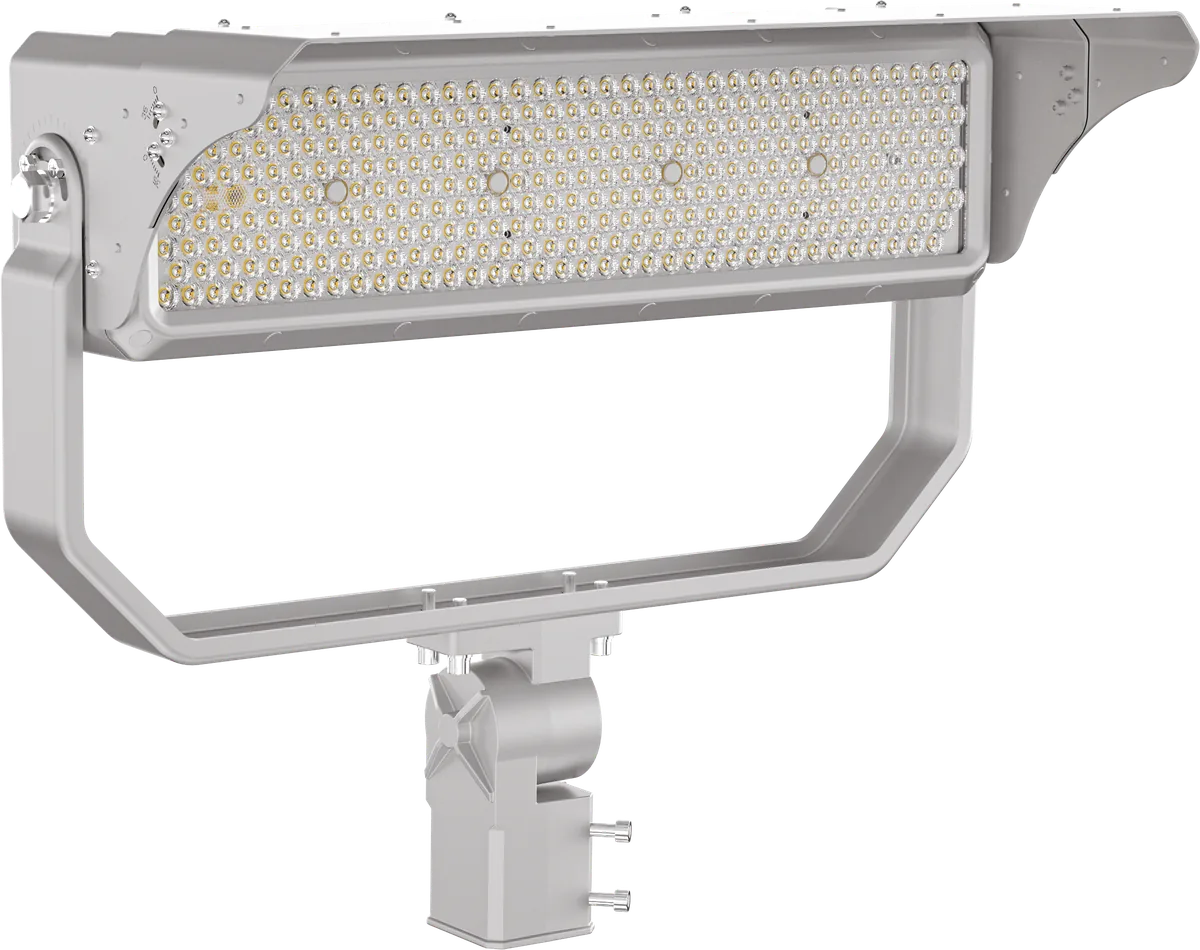
A cold-forged aluminum flood built in single- and double-module configurations from 500 W to 1500 W, with the same optics and chip set at every size.

UL Certified markUL Certified luminaireSafety US/CA · E497869
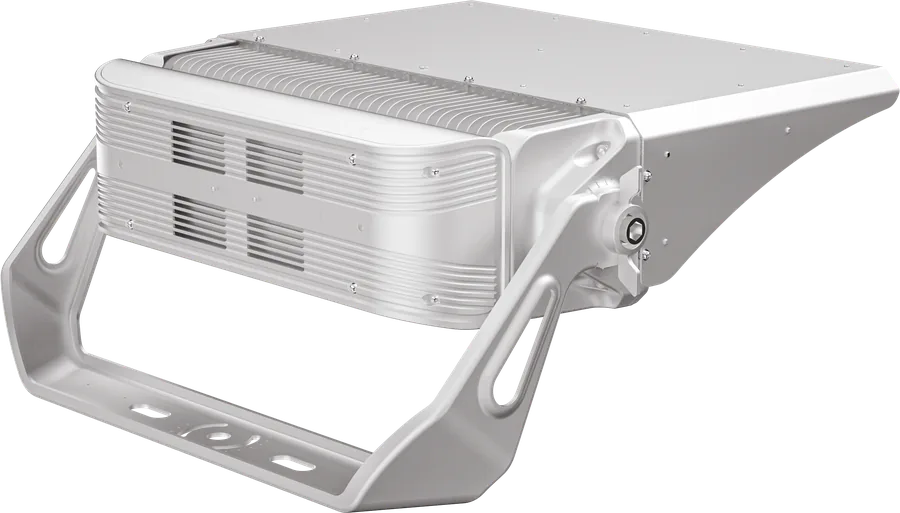
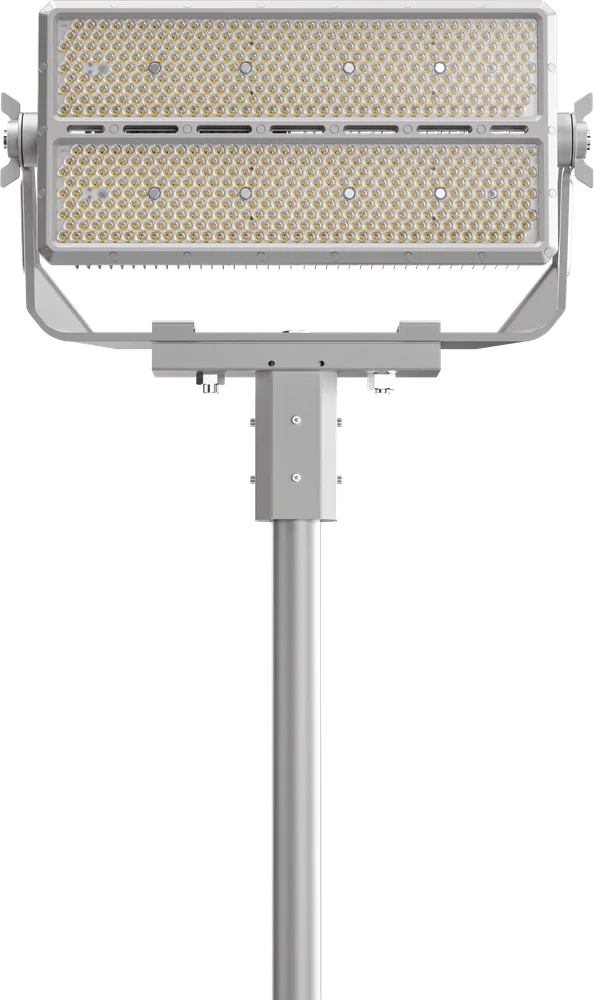
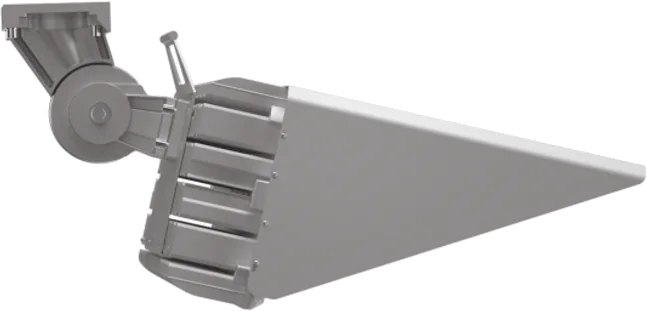
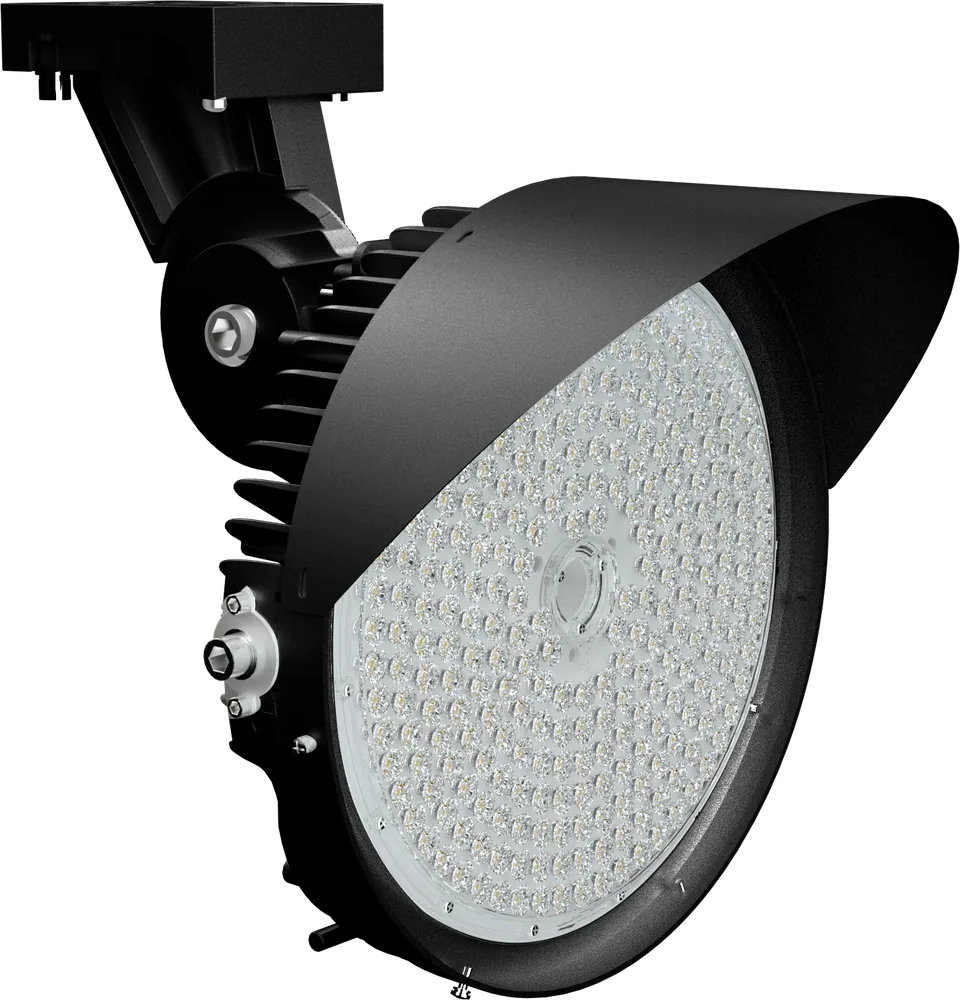
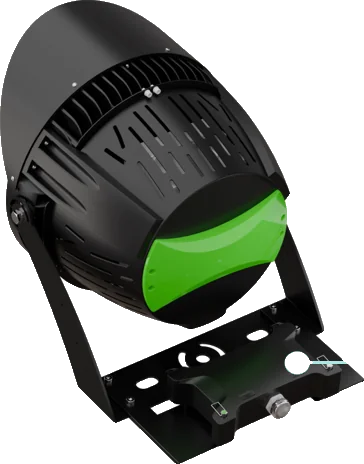
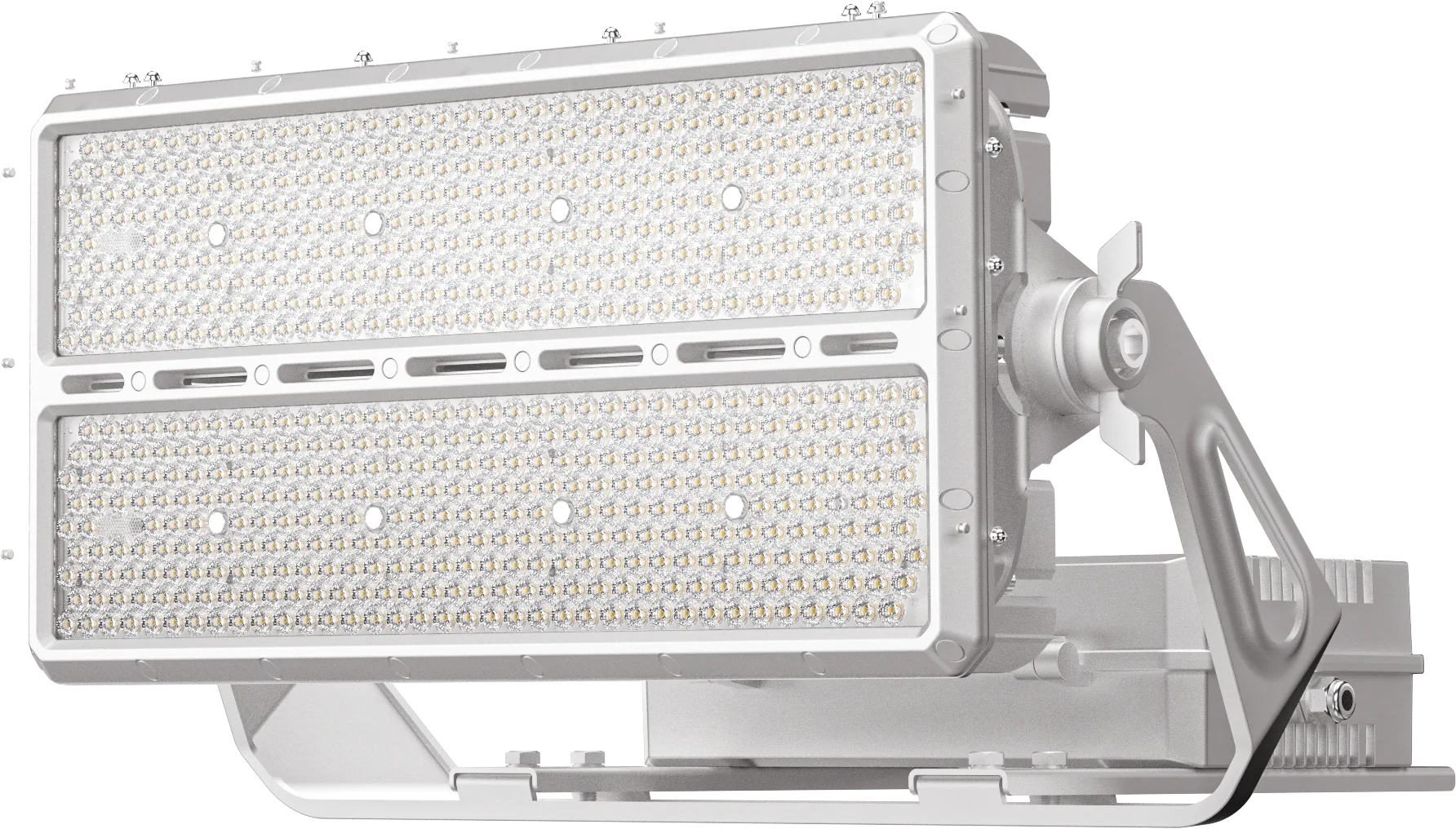
Apollo G3 two-module fixture, front view

Materials

Heat is the enemy of an LED. The Apollo's housing, bracket and board are chosen for how they move it away from the chips and how long they hold up doing it.

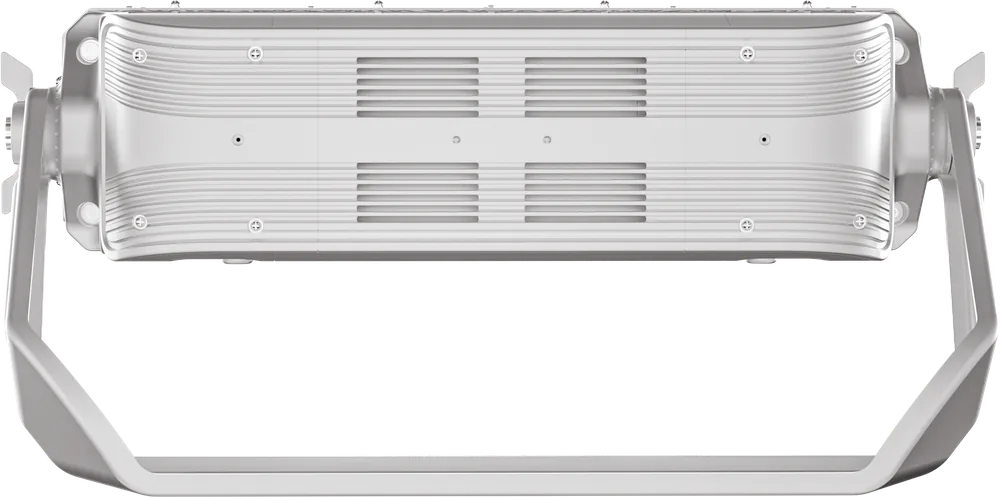
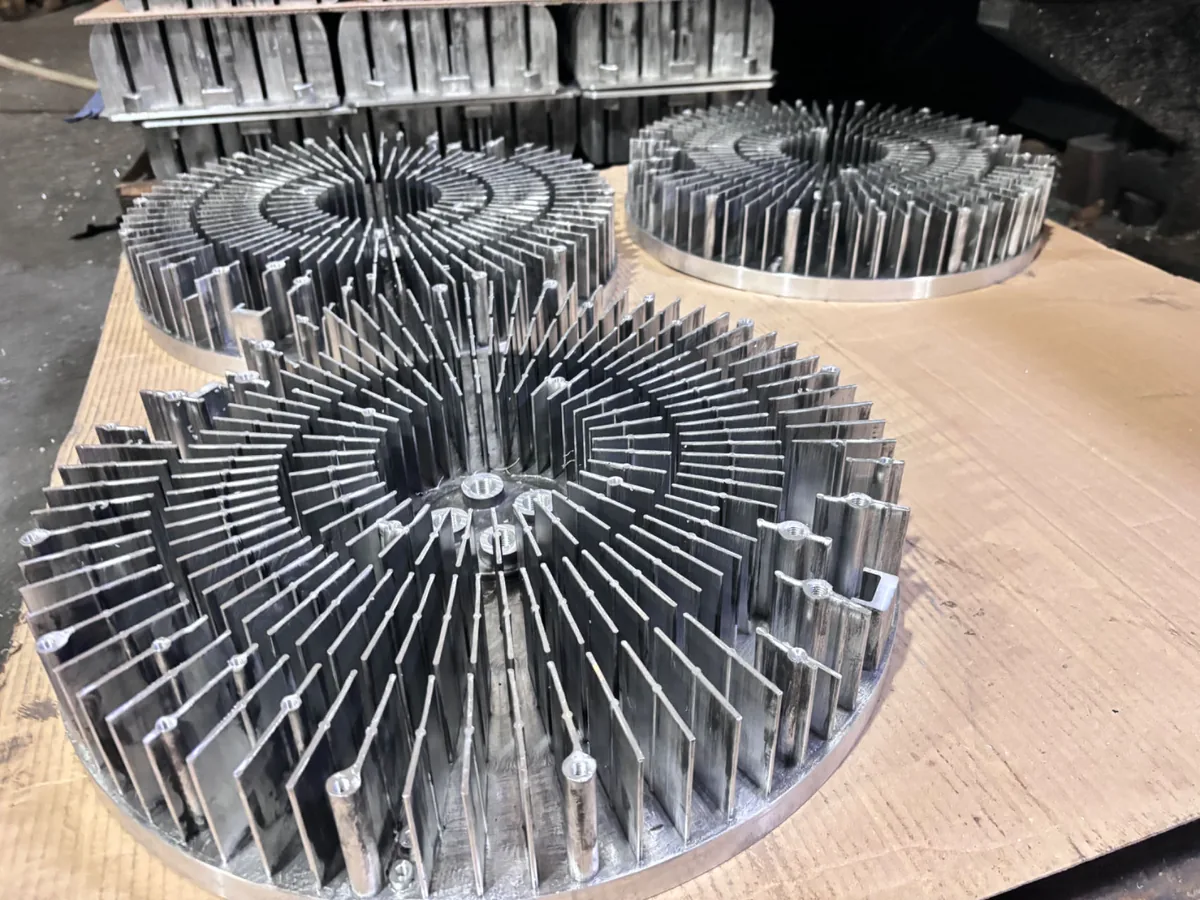
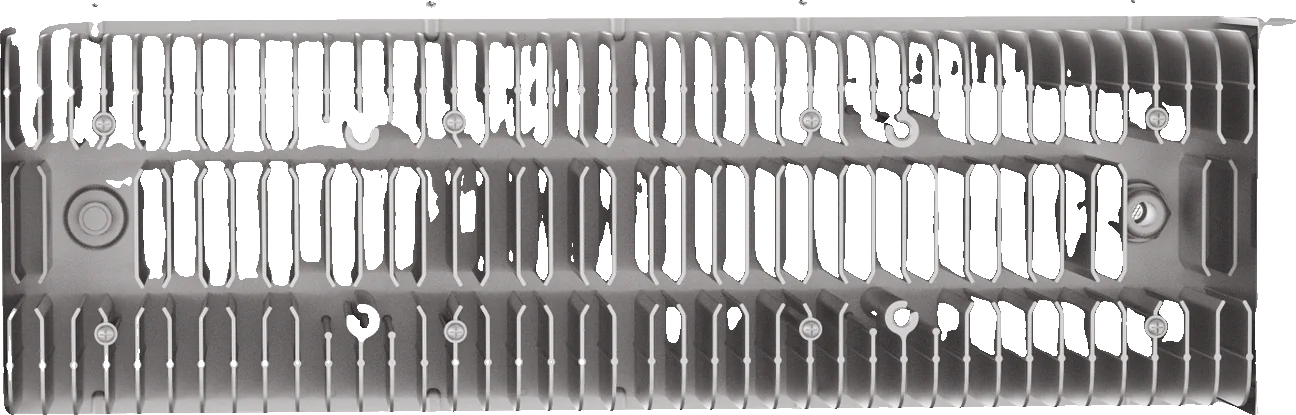
Apollo heatsink, front
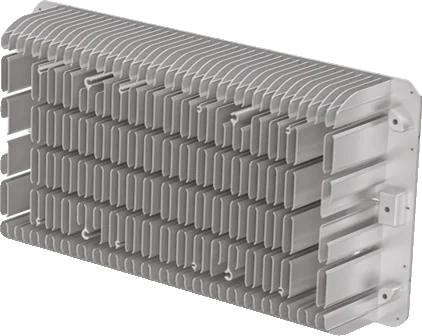
Apollo heatsink fin array, rear

Cold-forged 1070 aluminum heatsink

The heatsink is cold-forged from 1070 pure aluminum rather than die-cast. Cold forging leaves the metal dense and free of the porosity casting produces, so it conducts heat more than twice as well as die-cast alloy and keeps its ductility and yield strength under years of thermal cycling.

The fin layout is designed around airflow: a large dissipation area, open convection paths and a self-cleaning geometry that keeps dust from settling, so the fixture's thermal performance stays where it started. That structural efficiency also keeps EPA and weight low for the output.

226W/m·Kthermal conductivity, cold-forged 1070
96W/m·Ktypical die-cast alloy, for comparison
3,000hsalt-spray test passed
1.31m²heat dissipation surface area
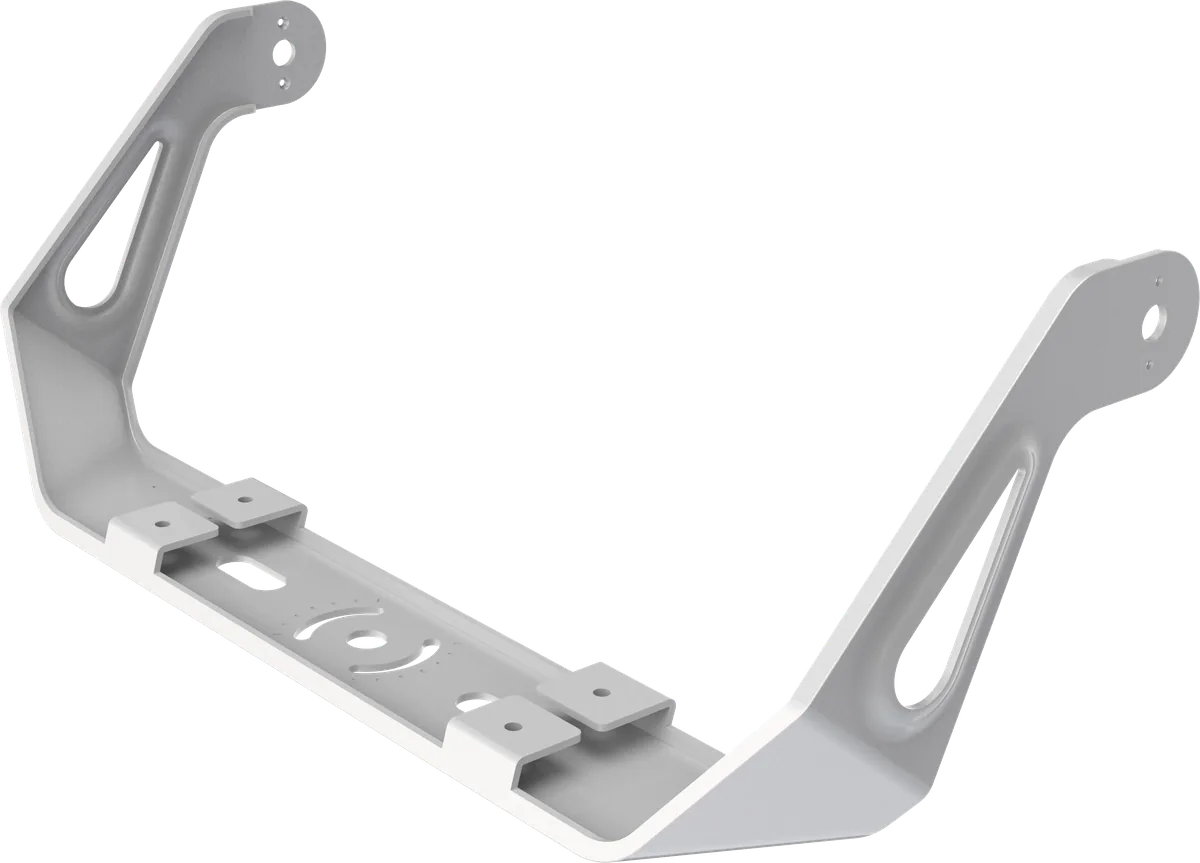
Apollo mounting bracket
Bracket corner showing the bent reinforcement edge

Reinforced mounting bracket

The bracket edge is formed with a bending-reinforcement process. It carries more than four times the weight of the fixture and can be hoisted for an hour with less than 2 mm of displacement.
Three materials are available depending on the site: SPCC steel for standard installations, stainless 304, or stainless 316 for coastal and marine environments. Surface treatment sets the corrosion rating.

4×fixture weight, load rating
<2mmdisplacement after 1 h hoist
2,000 / 2,500 / 3,000hsalt spray — SPCC / SS304 / SS316
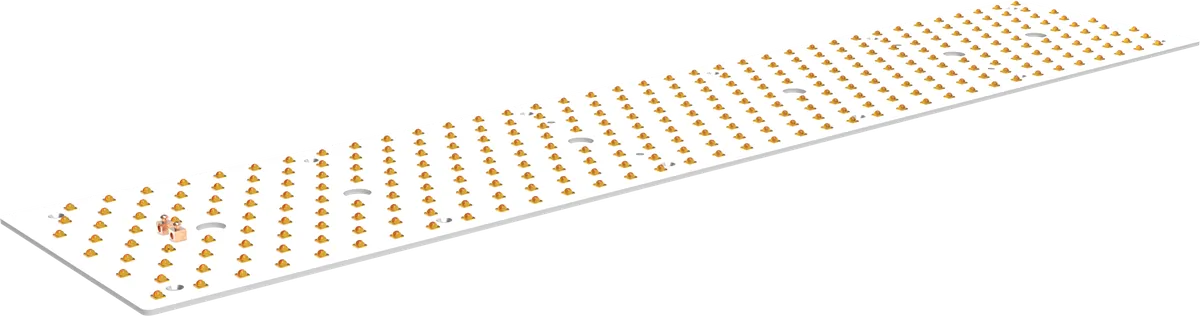
Apollo LED board render
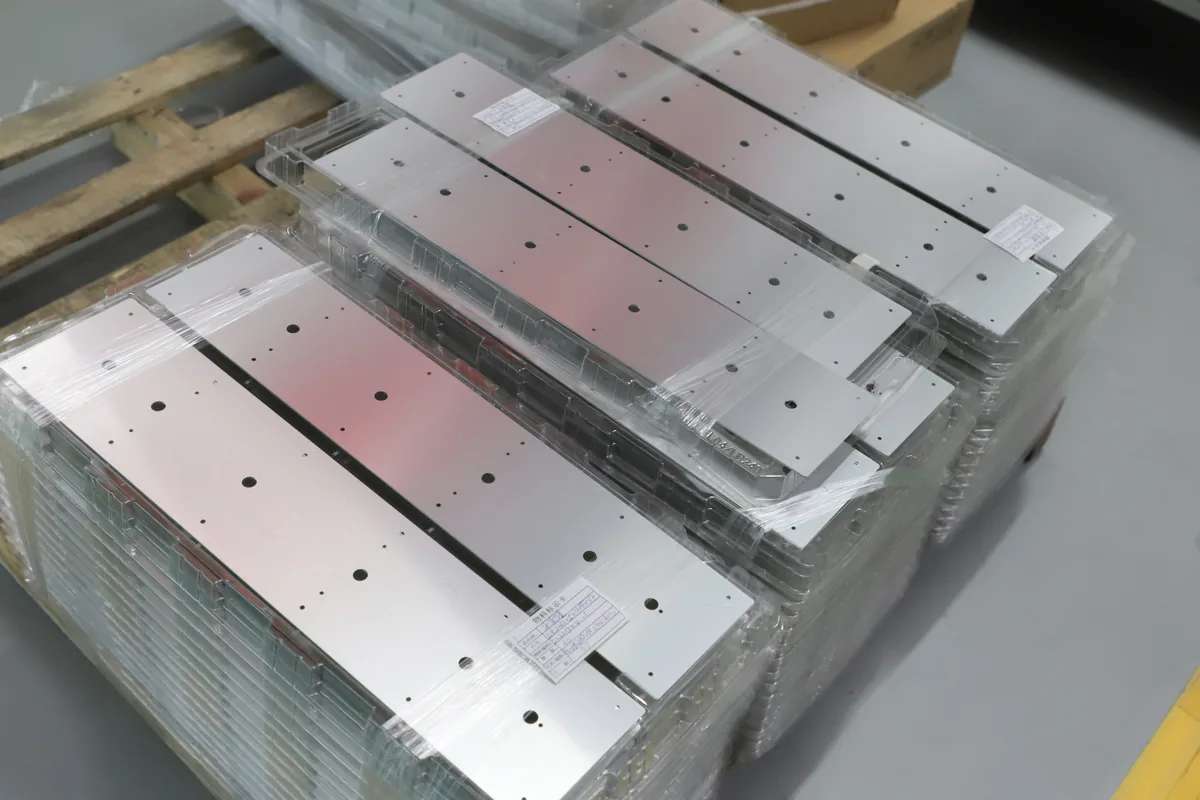
Stacked aluminum PCB substrates

1060 aluminum LED board

The LEDs sit on a 1060 pure-aluminum substrate — at least 99.6 % aluminum — finished with Japanese Taiyo ink that brings the board's average reflectivity to 85 %, so light that would be absorbed by the board is returned to the optic.
  • 5.0 W/m·K thermal conductivity through the board
  • 5 kV transient withstand voltage
  • 120 µm insulation layer · CTI ≥ 600

Optics & LEDs

Where the light goes is decided by the lens; how it looks on camera is decided by the chip. Both are specified for broadcast.

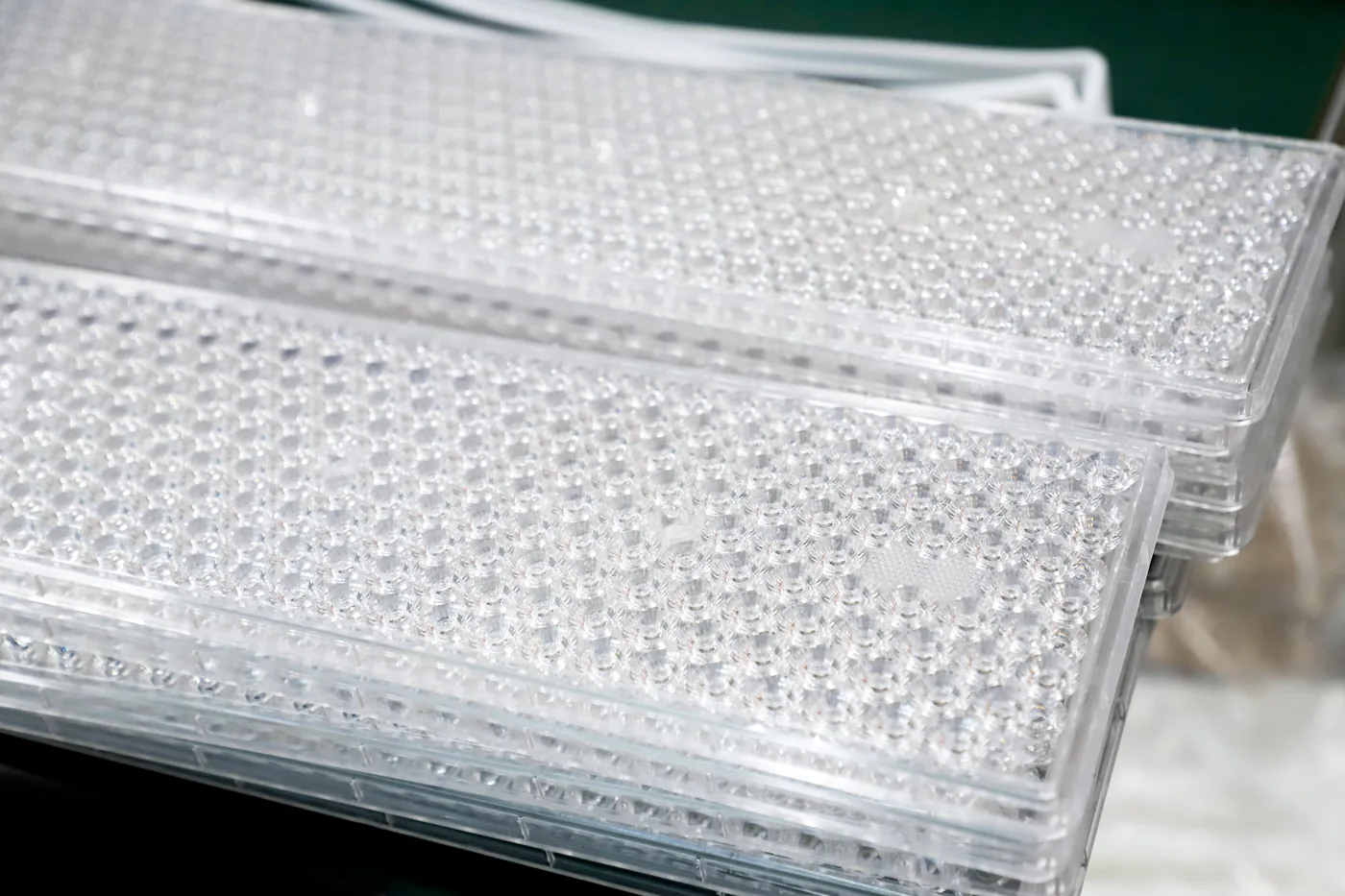
Apollo polycarbonate lens modules
Single lens module

TEIJIN Panlite® polycarbonate lens

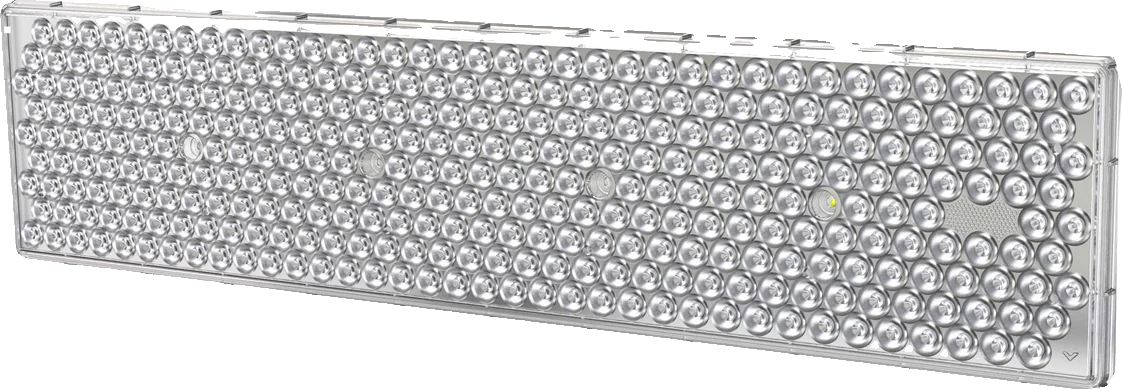
Lenses are molded from Japanese TEIJIN Panlite® optical polycarbonate with transmittance up to 92 %. Each large-format module carries an accurate asymmetric design that controls BUG (backlight, uplight, glare) and improves light utilization; the module size itself reduces assembly error.

  • Beam distributions of 45 / 50 / 55 / 60° for different throw and field geometry
  • An ultra-narrow 10° optic for long-distance lighting from high poles
  • A rear cutoff / backlight control that removes spill light behind the pole
  • Higher center-beam candlepower than comparable products
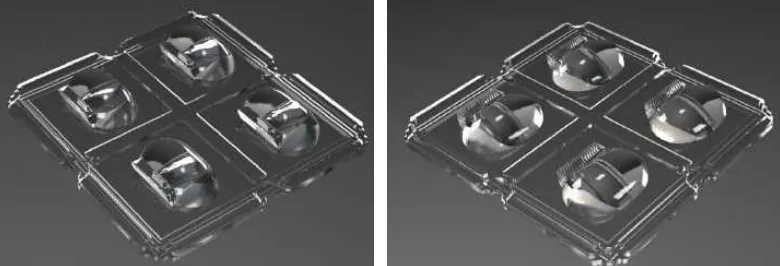
Silicone lens array
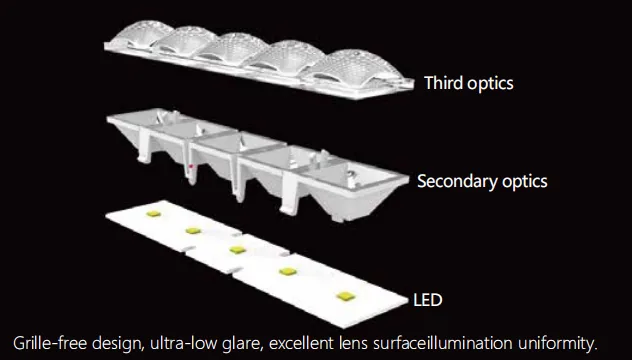
Firefly optic exploded view: LED, secondary reflector cup, PMMA tertiary lens

Silicone lens and Firefly Series Optics®

A silicone lens option tolerates temperatures to 200 °C, so higher drive power is available. The lens body is itself sealed and waterproof — no separate waterproof structure and no cover glass — which raises optical efficiency and lets a lower wattage meet a lighting target that previously needed more.

Firefly Series Optics® pair a reflective cup with a PMMA tertiary lens. The result is precise control with very uniform surface illumination and a lens face you can look at directly without glare, at 80–85 % transmittance.

200°Csilicone lens temperature rating
80–85%Firefly optic transmittance
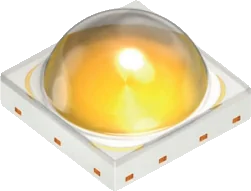
Osram 3737 LED package
4K broadcast camera

Broadcast-grade LED chip set

Apollo uses patented Osram 3737 P8 + P9 chip sets instead of the 2835, 3030 and 5050 packages common in the market. The larger package holds a higher lumen-maintenance rate, better airtightness and a higher junction temperature, and lives longer under sports-lighting duty cycles.

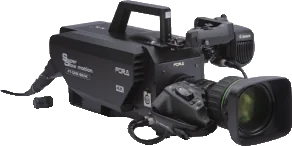
Color is mixed for television: the chips are specified to CRI above 90, TLCI above 90 and R9 above 75, so skin tones and team colors hold up on 4K broadcast cameras.

>90CRI
>90TLCI (television lighting consistency index)
>75R9 — saturated red rendering

LED drivers

Every Apollo ships with a 0–10 V dim-to-off driver matched to the wattage and supply voltage.

Apollo G3 driver selection by wattage and input voltage
Wattage100–277 Vac277–480 Vac200–480 Vac
Apollo G3 500 WEUD-480S280DTESM-680S350MGSOSEN SS-500MS
Apollo G3 600 WEUD-600S280DTESM-680S350MGSOSEN SS-680MS
Apollo G3 750 WEUM-880S420MGESM-880S420MGSOSEN SS-880MS
Apollo G3 1200 WEBM-1K2S740MGESM-1K2S740MGSOSEN SS-1200MS
Apollo G3 1500 WEUM-880S420MG ×2ESM-880S420MG ×2SOSEN SS-880MS ×2

All drivers: 0–10 V dim-to-off.

Mounting options

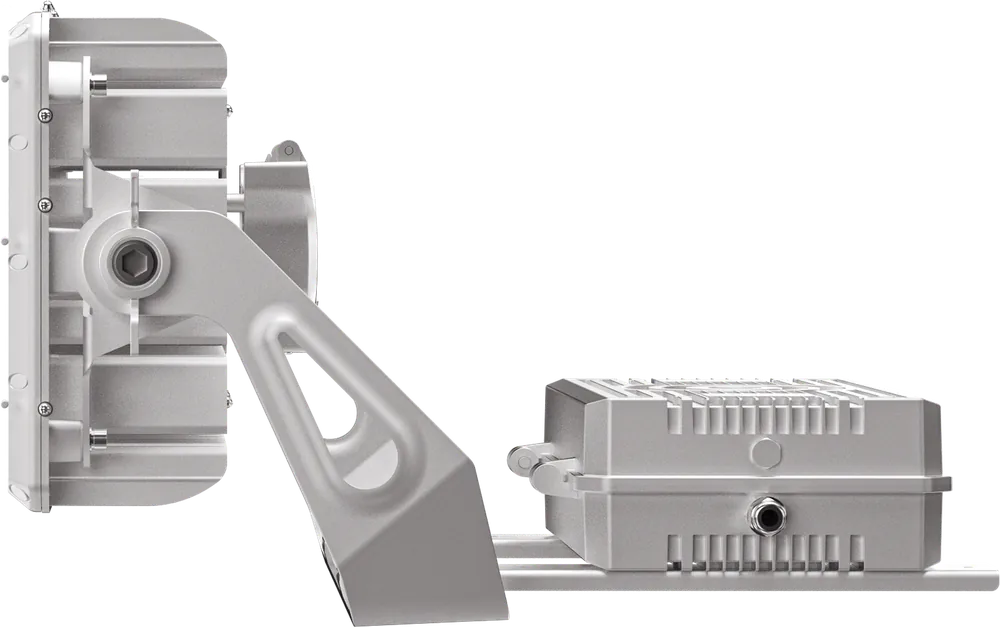
Three bracket families cover new poles, cross-arms and one-for-one retrofits — and each one is built so the installer can aim it precisely from the bucket.

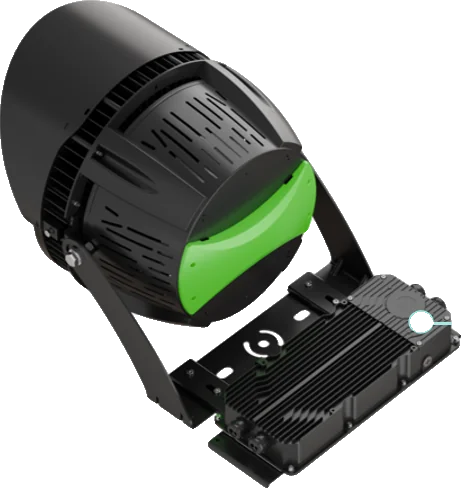
Apollo on yoke bracket with driver box, side view
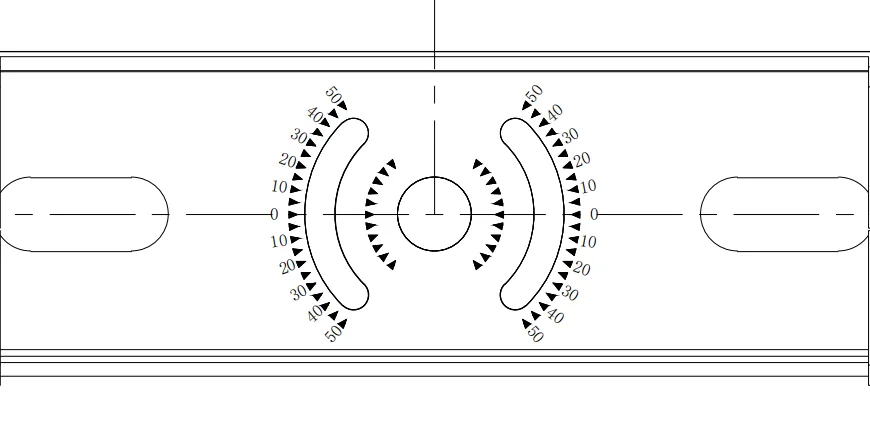
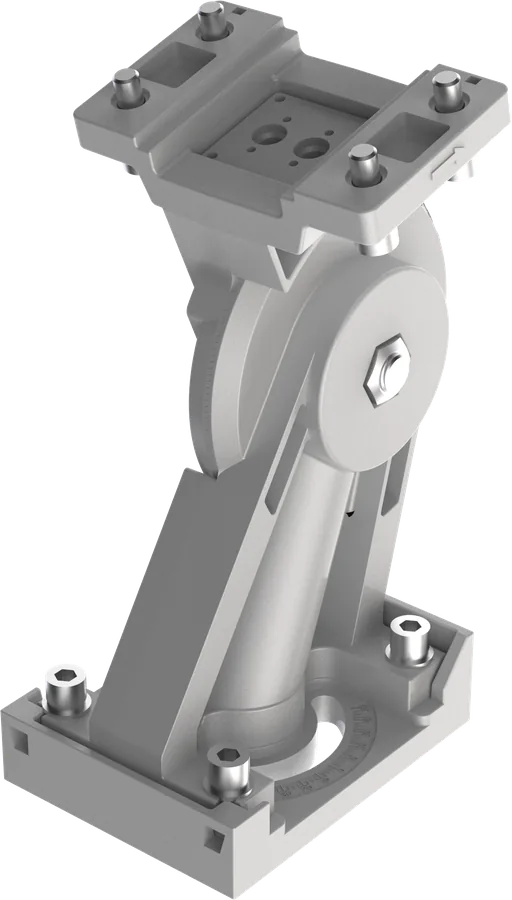
Center scale on the yoke bracket for left/right adjustment
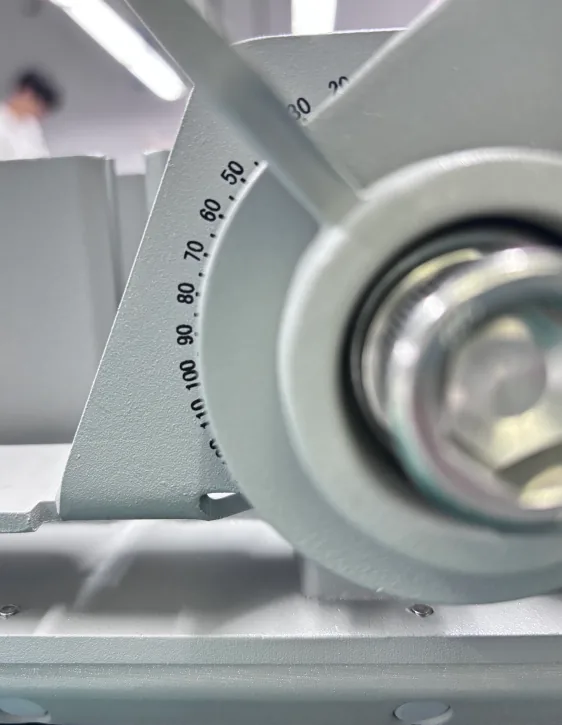
Tilt scale on the side of the bracket
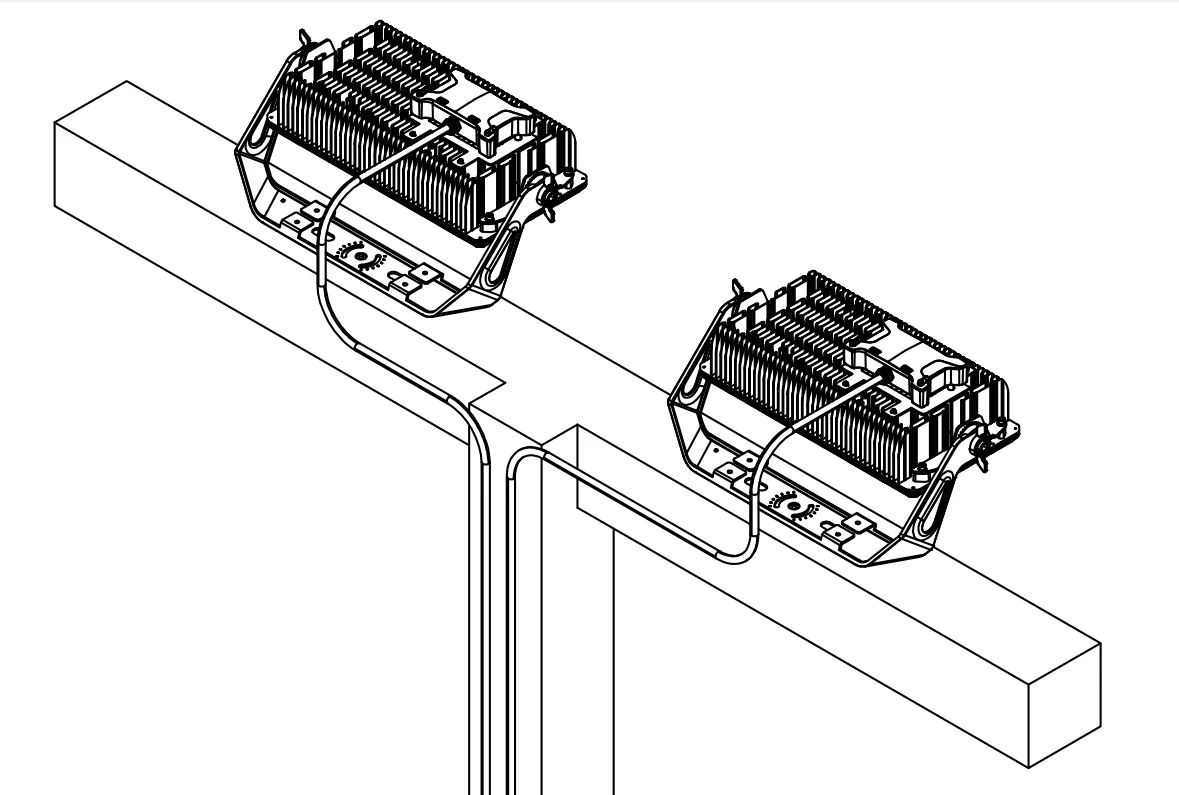
Two fixtures on a cross-arm with left/right rotation marked

Yoke / trunnion bracket

The yoke bracket carries two engraved scales. A center scale on the base lets the installation contractor set the fixture's left–right rotation to a number, and a scale on the side arm sets the up–down tilt the same way — so a photometric aiming plan can be executed rather than eyeballed.

Apollo single module on slip-fitter bracket
Slip-fitter, rated to 5 G vibration

Slip-fitter (SF) bracket

For tenon and pole-top mounting, two slip-fitter designs are offered by vibration class. The standard bracket resists up to 5 G; the heavy-duty version, shown below on single- and double-module fixtures, resists up to 10 G for bridges, rail-adjacent sites and tall poles in wind.

Knuckle assembly bracket
Apollo with knuckle bracket fitted

Knuckle assembly bracket

The knuckle bracket bolts an Apollo onto the existing cross-arm hardware of a metal-halide installation. On a retrofit there is no need to change the pole or the arms: it is a one-for-one replacement of a legacy metal-halide 1500–2000 W lamp with a 1200 W LED fixture, which keeps the structural and civil cost out of the project.

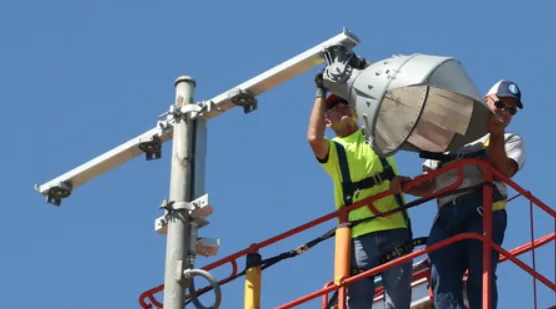
Crew removing a traditional metal-halide floodlight
Remove the MH lampExisting pole and cross-arm stay in place
1200 W LED fixture on knuckle bracket
Fit the 1200 W LEDKnuckle bracket mates to the original mount
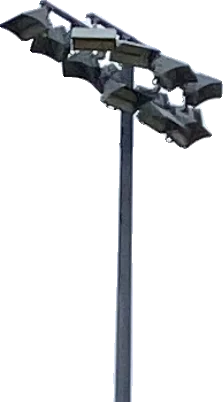
Retrofitted pole with four LED fixtures
Re-aim on the poleSame head count, same spacing
Retrofitted field at night
LitPark field after the one-for-one swap

Dynamic theme controls

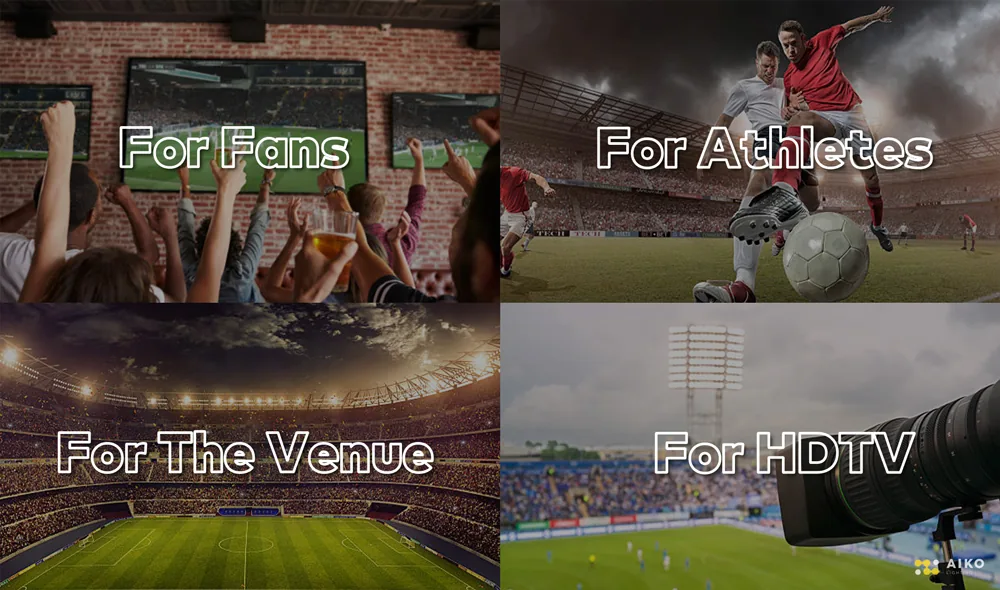
The lighting system is designed for four audiences at once — fans, athletes, the venue and the HDTV cameras — and can be scripted for the moments between plays as well as the plays themselves.

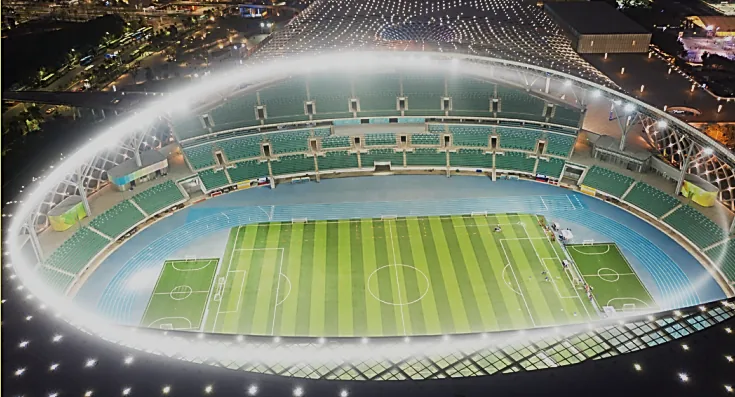
Stadium with light-tracing effect running around the bowl
Fans, athletes, venue and HDTV — the four audiences

Light tracing and light flashing

With DALI or DMX/RDM control, fixtures respond individually: chases that run around the stadium bowl, synchronized flashes on a score, instant blackout-and-restrike for introductions. Class I construction and 10 kV surge protection keep the electronics safe on tall, exposed poles.

  • DALI and DMX / RDM control protocols
  • D4 dimming · Class I electrical safety
  • 10 kV surge protection
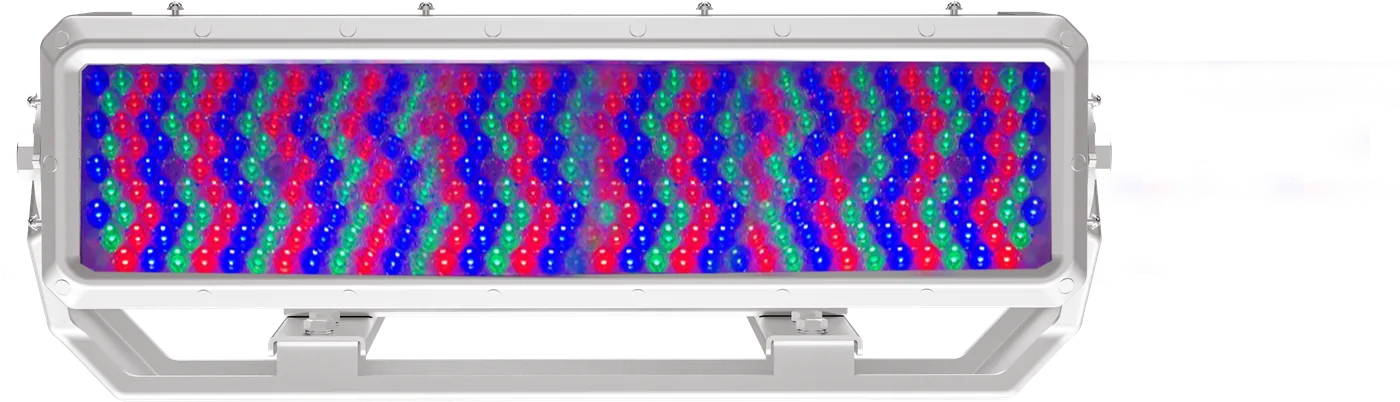
Apollo RGB fixture

Theme lighting — RGB, RGBA, RGBW

A color version of the Apollo carries Cree® XLamp® XP-E2 LEDs in red, green, blue and amber or white, in the same housing and on the same brackets as the white-light fixture. Team colors on the field, without a second set of poles.

Cree XLamp XP-E2 LED packages in four colors

Optional features

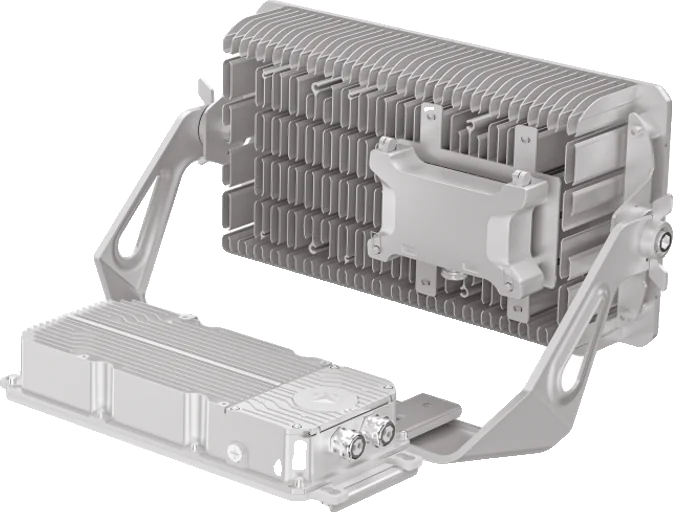
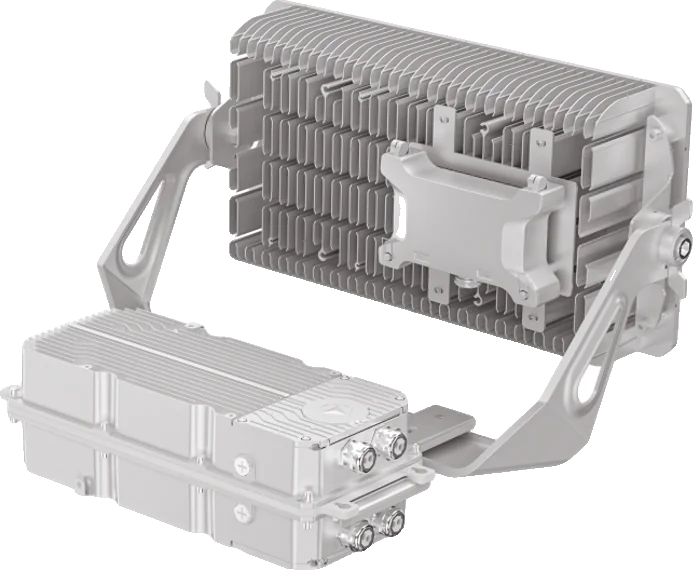
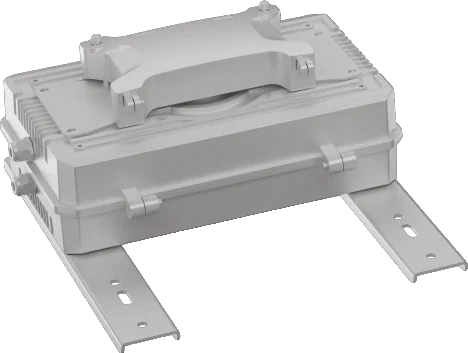
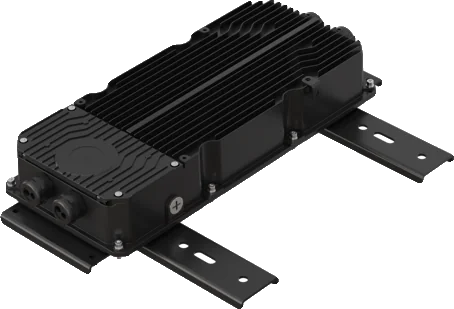
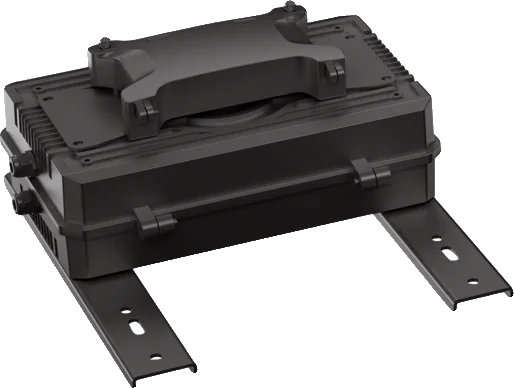
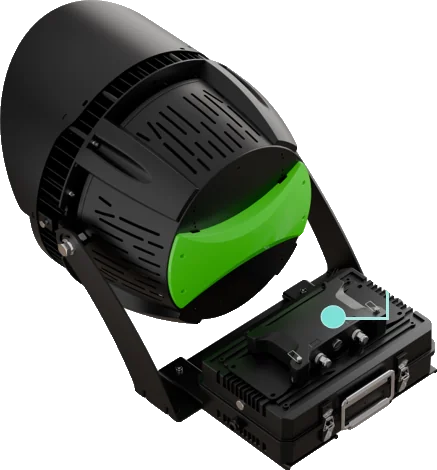
An enlarged driver box turns the fixture into a self-contained node: driver, controller and AC/DC separation in one sealed cavity, no external junction box.

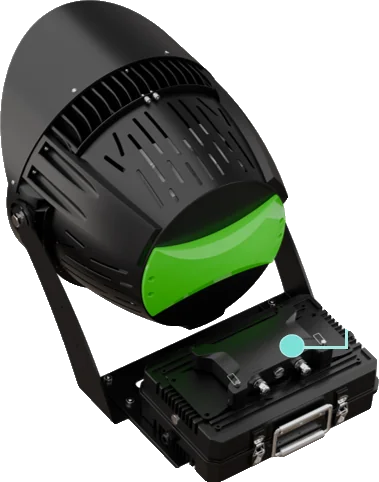
Apollo with electrical cavity, front view
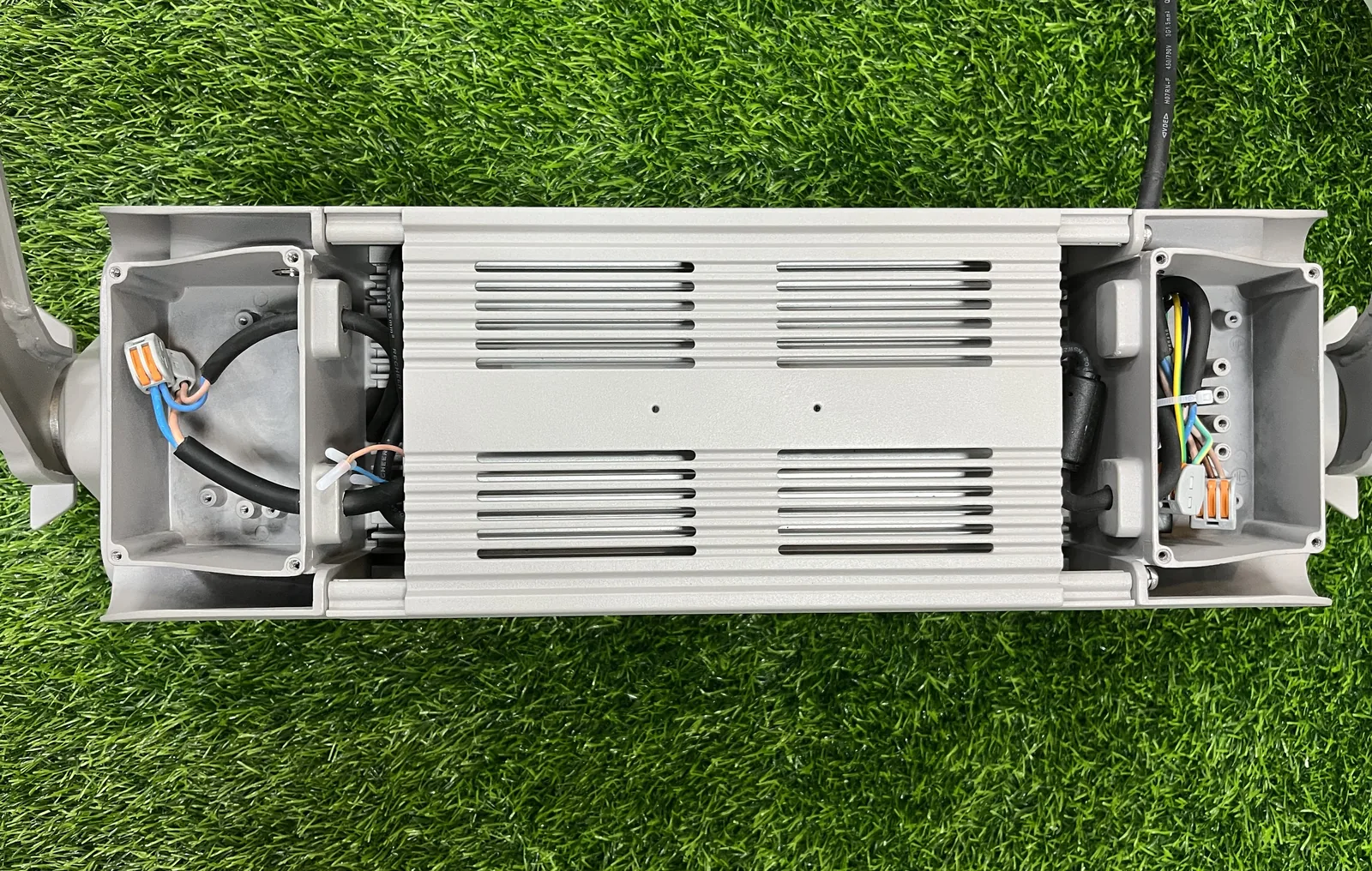
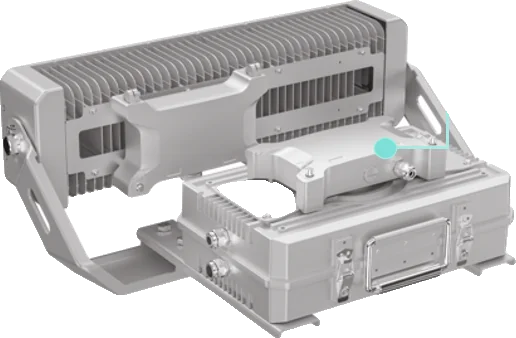
Electrical cavity opened, showing driver and separated AC and DC compartments

Dedicated electrical cavity

The Apollo has its own electrical cavity. It houses intelligent control hardware and physically separates the AC and DC sides of the fixture, which makes the product safer to service and more reliable over its life.

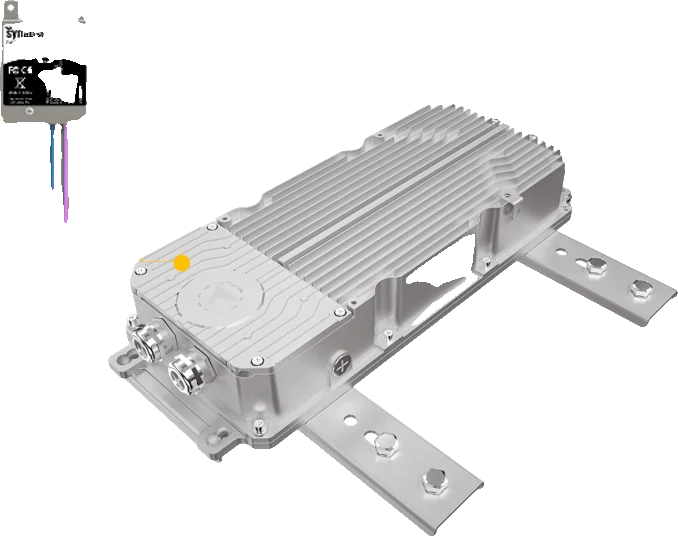
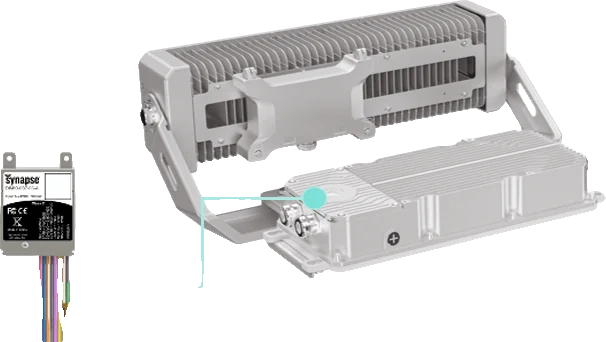
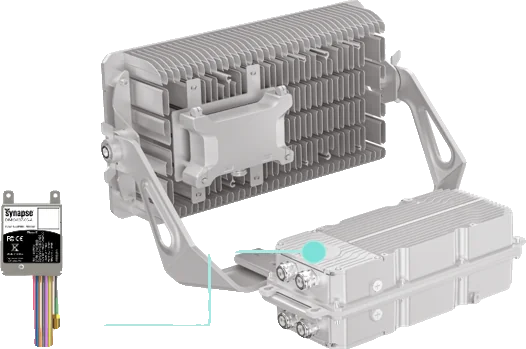
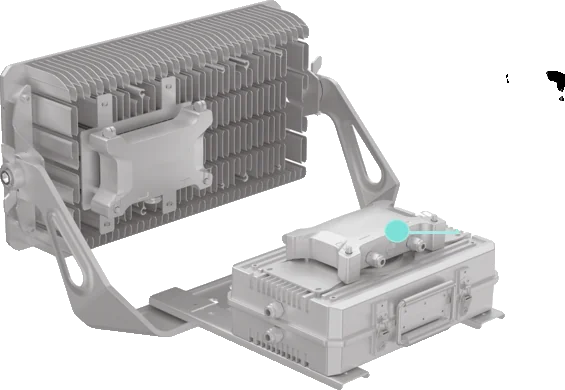
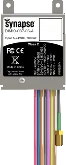
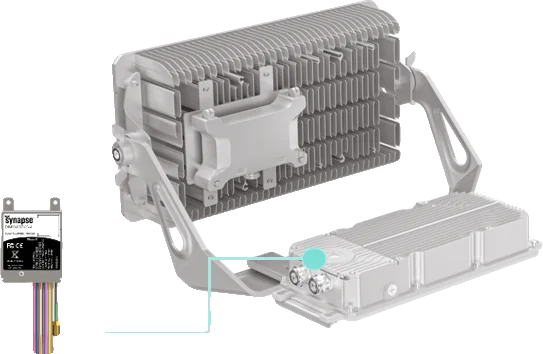
Upgraded driver box with Synapse controller wired in

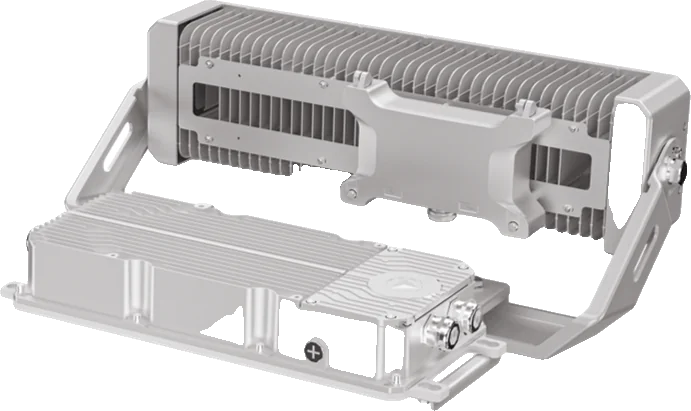
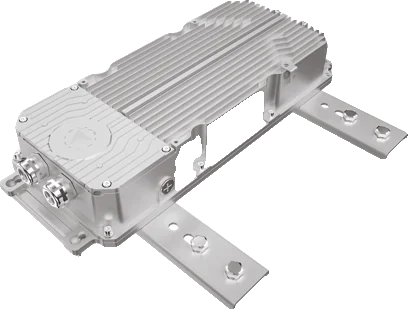
Upgraded driver box with room for a Synapse controller

The new driver box is sized to take a Synapse wireless controller inside it, so control does not need an additional junction box on the pole. Box count follows wattage: one driver box through 1200 W, two at 1500 W.

Synapse controller configurations

Round LED sports flood

Atlas
Scorpius

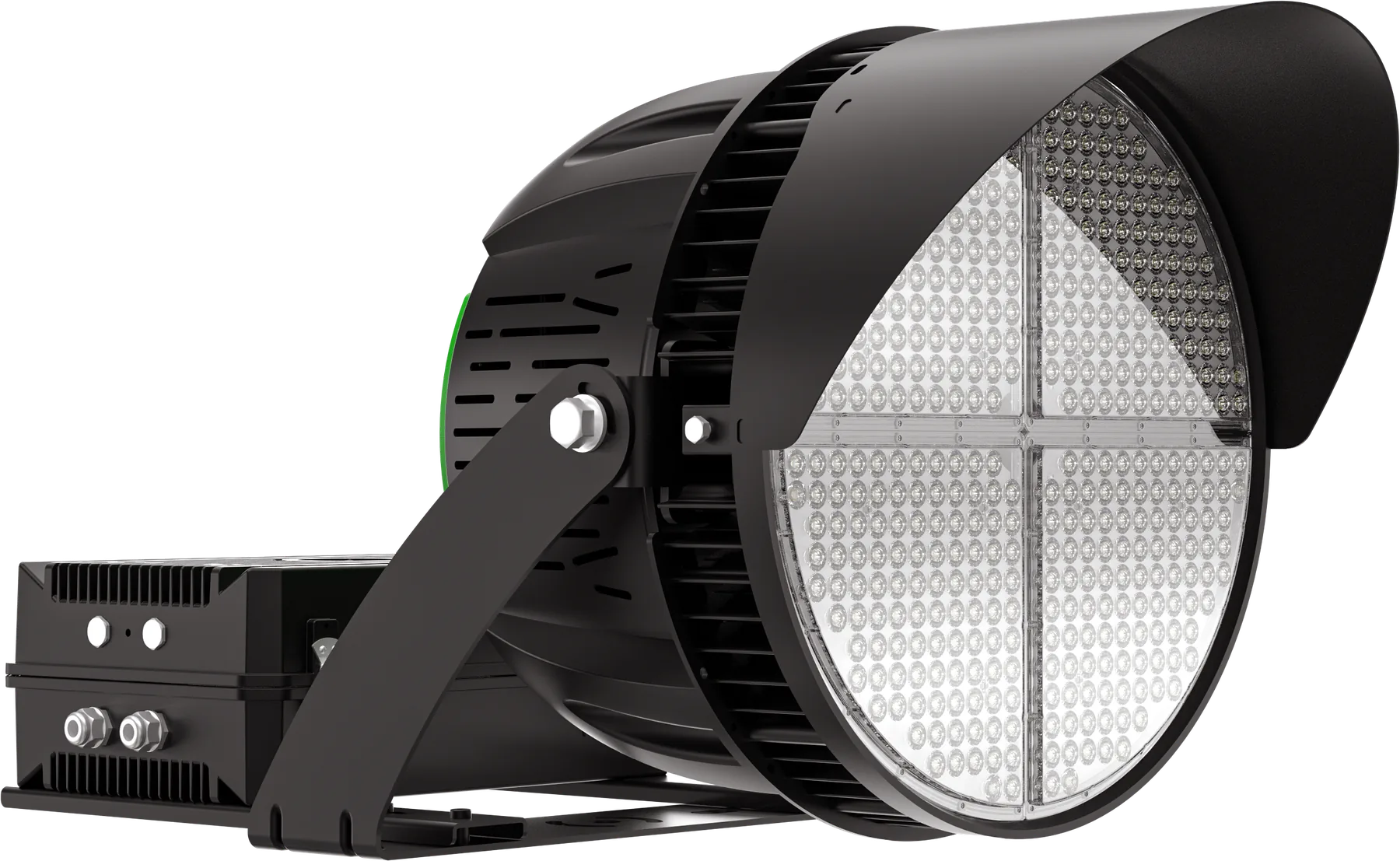
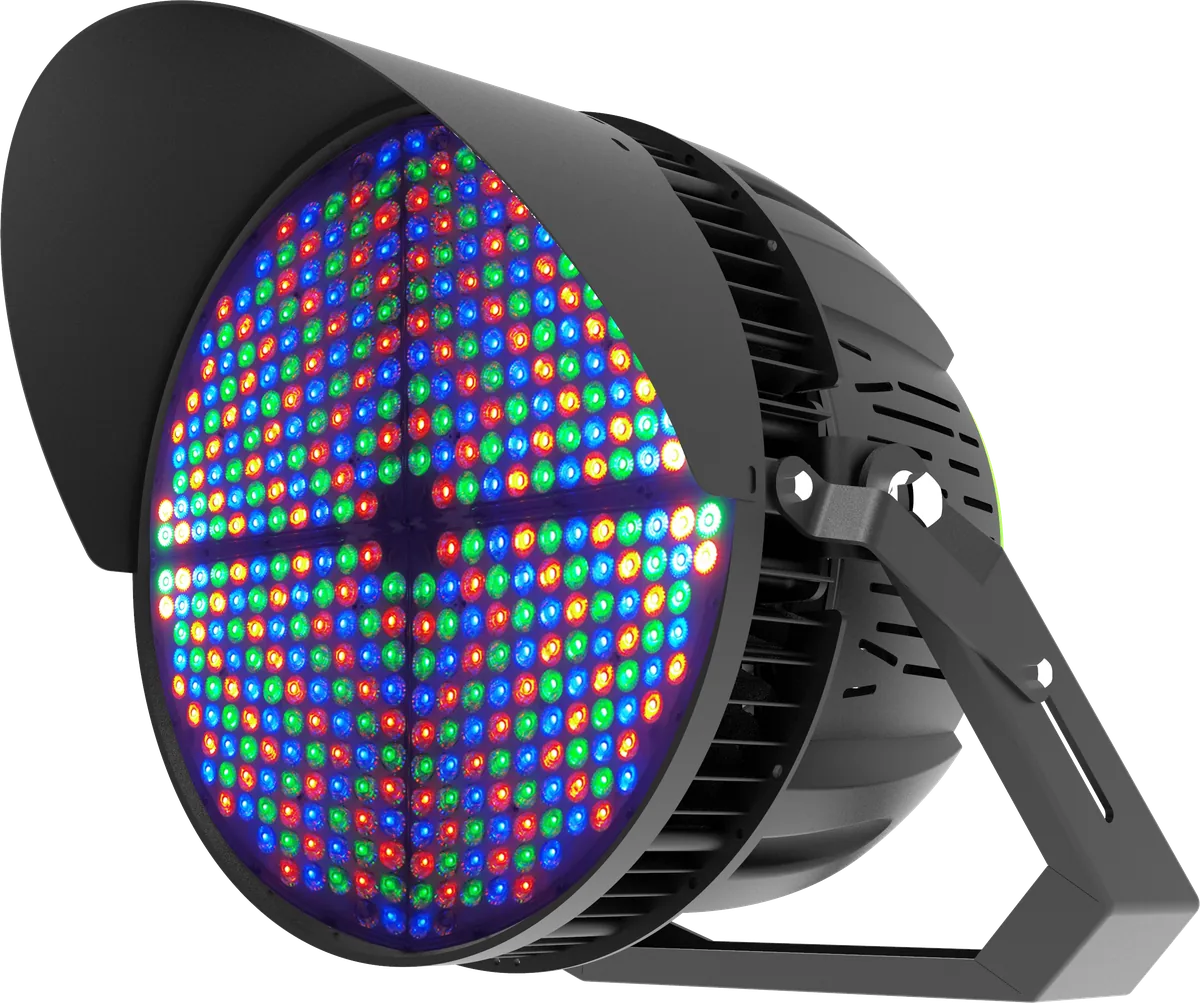
A round-body flood from 300 W to 1250 W with modular optics, a visor for spill control, and a one-for-one path off legacy metal-halide poles.

UL Certified markUL Certified luminaireSafety US/CA · E497869
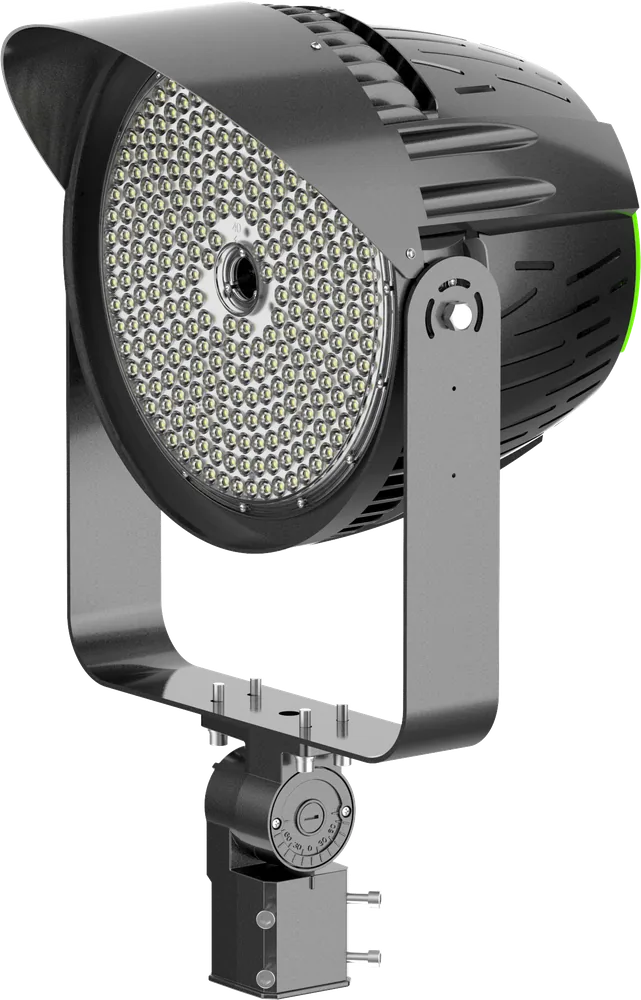
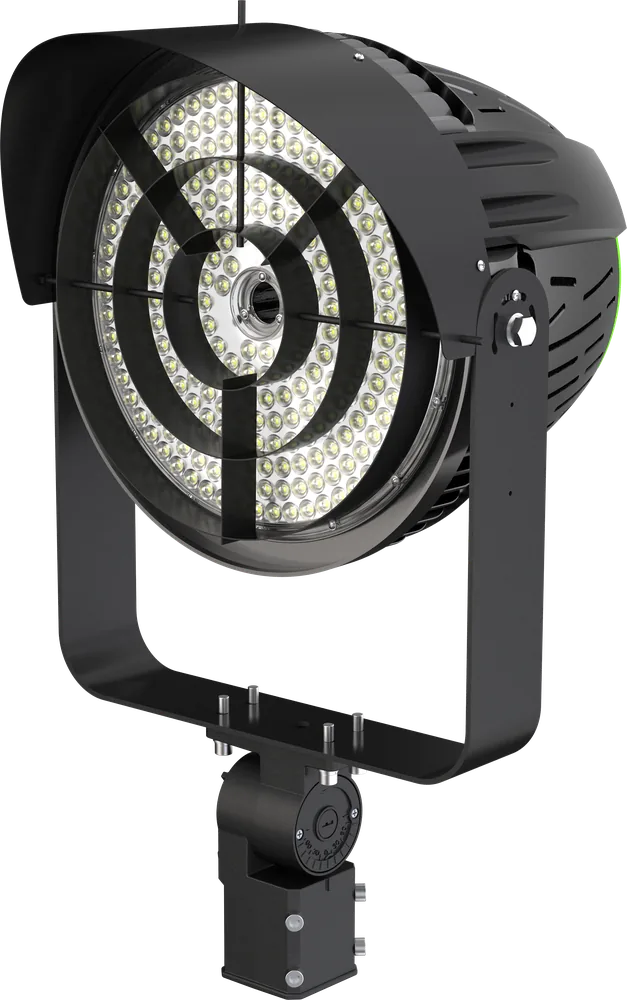
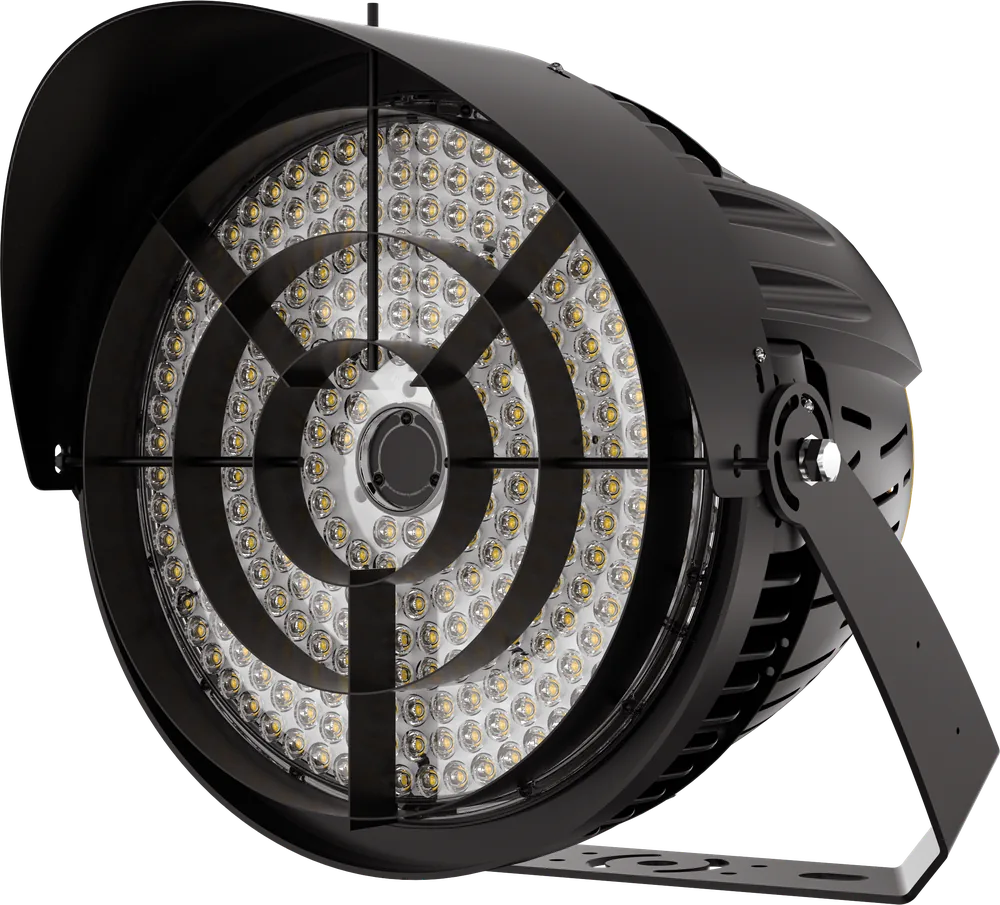
Atlas Scorpius with visor, front three-quarter view

Materials

Two heatsink constructions across the range — die-cast at the low end, cold-forged where the power demands it.

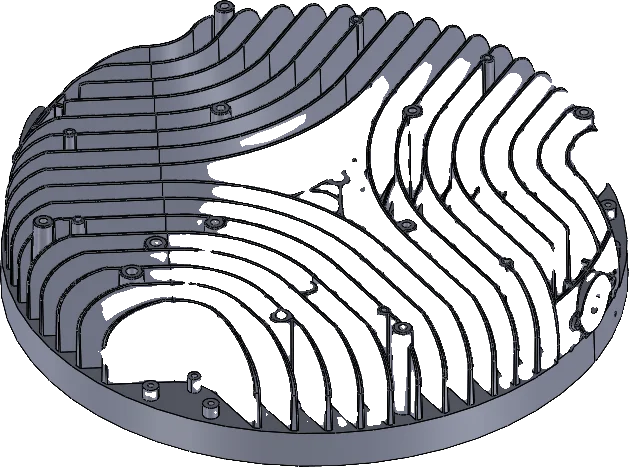
Die-cast ADC12 heatsink, spiral fins
300–600 W · die-cast aluminum ADC12
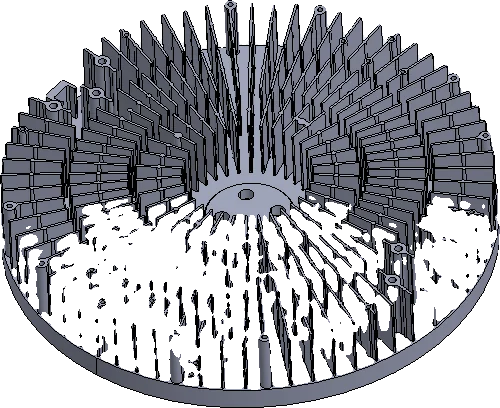
Cold-forged 1070 heatsink, radial pin fins
750–1250 W · cold-forged 1070 pure aluminum

Heatsink by wattage

From 750 W up, the Scorpius uses the same cold-forged 1070 pure aluminum as the Apollo: high plasticity, high corrosion resistance, and thermal conductivity of 226 W/m·K — more than twice a cast alloy — with no porosity, so the housing is inherently more airtight.

At 300–600 W, where thermal load is lower, a die-cast ADC12 heatsink with a spiral fin pattern provides the cooling the fixture needs at a lower cost.

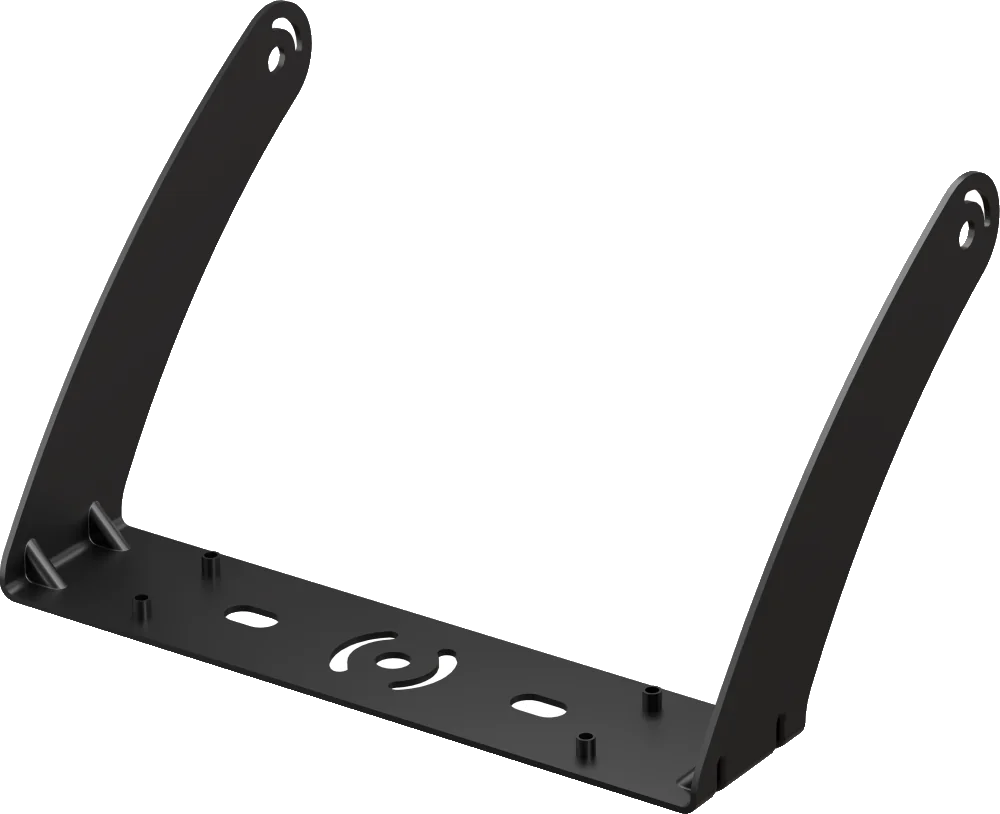
Scorpius U-bracket, black powder coat

Bracket

The standard bracket is SPCC steel, hot-dip galvanized and then powder-coated — suited to inland and non-coastal installations. For offshore and coastal projects a stainless-steel 316 bracket is selected instead.

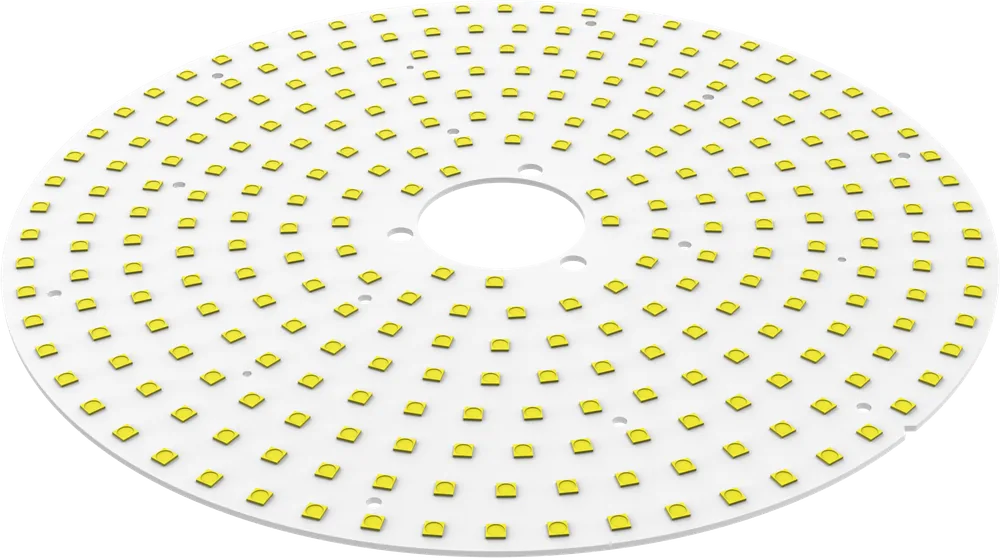
Round LED board for 300–600 W
300–600 W · single round board
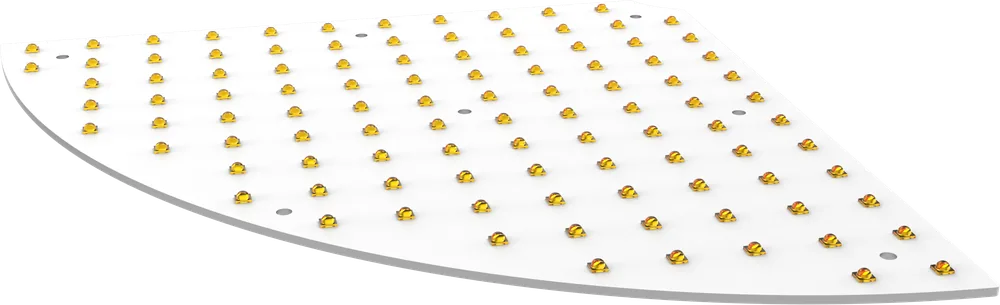
Sector LED board for 750–1250 W
750–1250 W · sector boards

1060 aluminum LED board

Same substrate as the Apollo — 1060 pure aluminum at ≥ 99.6 %, Taiyo ink at 85 % reflectivity, 5 kV withstand, 120 µm insulation, CTI ≥ 600. Thermal conductivity through the board is 3.0 W/m·K on the 300–600 W boards and 5.0 W/m·K on the 750–1250 W boards.

Optics & LEDs

Modular lens sectors combine into different distributions from a small set of parts.

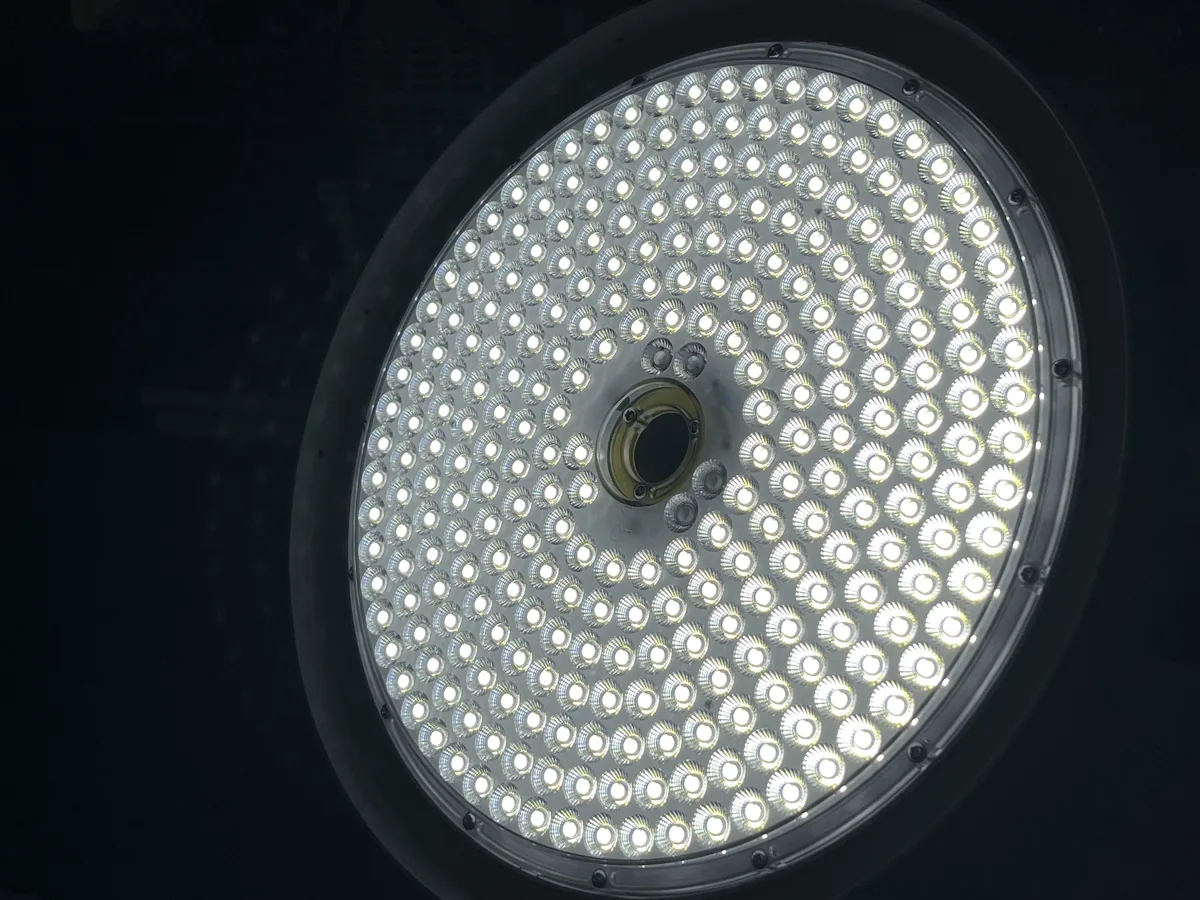
Scorpius 300–600 W lens face
300 / 400 / 500 / 600 W
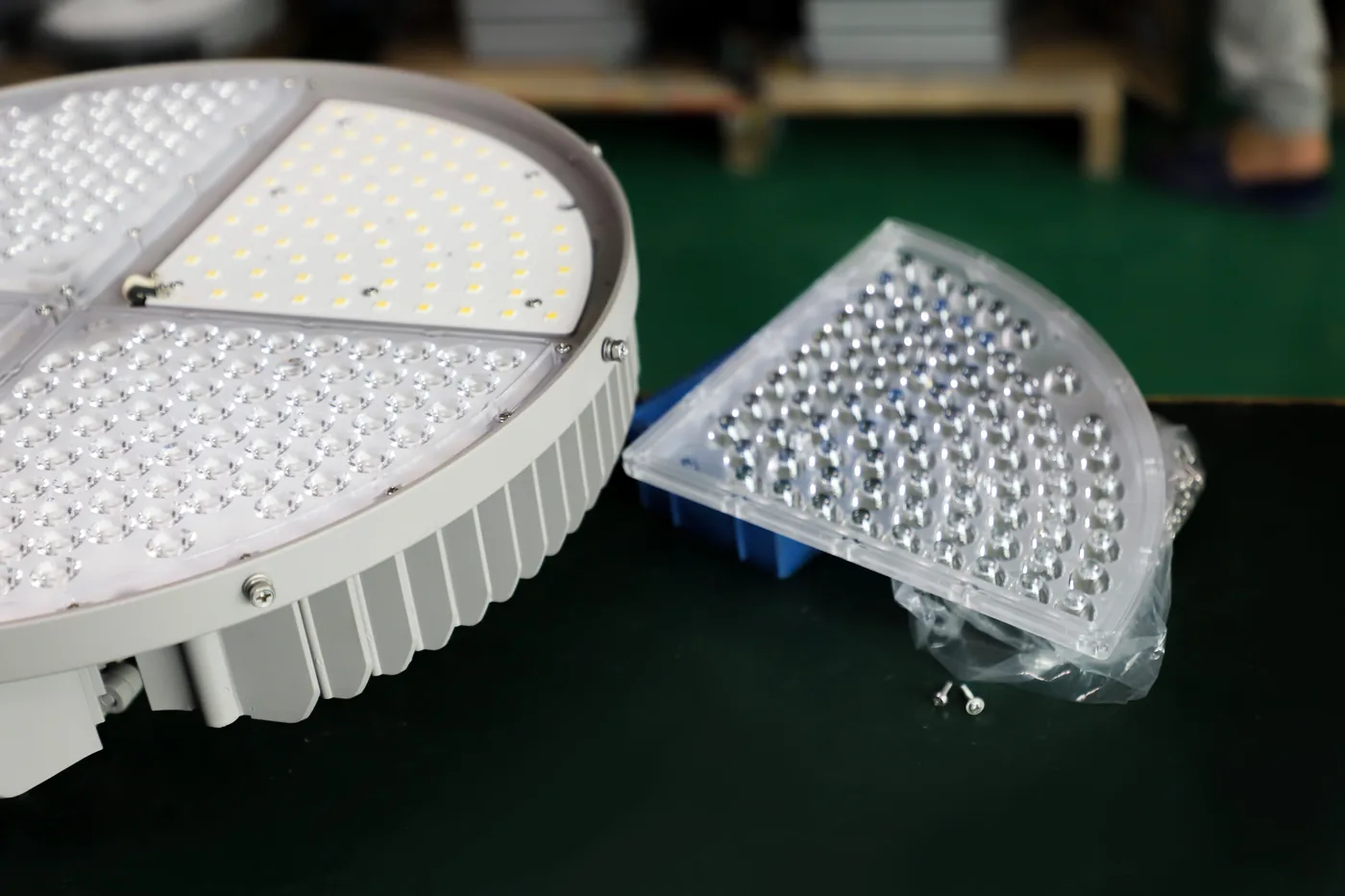
Scorpius 750–1250 W lens sectors on the bench
750 / 1000 / 1250 W

Modular TEIJIN Panlite® optics

The same 92 %-transmittance polycarbonate as the Apollo, molded as sector modules. Sectors are combined to form different distributions from a shared set of tooling, which keeps SKUs down and lead times short.

  • Beam distributions of 12 / 15 / 20 / 40 / 60 / 80°
  • Rear cutoff / backlight control to remove spill behind the pole
  • Higher center-beam candlepower than comparable products
Osram 3737 LED package
4K broadcast camera

Same broadcast-grade chip set

Scorpius carries the patented Osram 3737 P8 + P9 chips described in the Apollo section: higher lumen maintenance, better airtightness and higher junction temperature than 2835 / 3030 / 5050 packages, mixed to CRI > 90, TLCI > 90 and R9 > 75 for HDTV.

LED drivers

0–10 V dim-to-off drivers matched to wattage and supply voltage.

Atlas Scorpius driver selection by wattage and input voltage
Wattage100–277 Vac277–480 Vac200–480 Vac
Scorpius 300 WEUM-320S760MGAESM-320S760MGSOSEN SS-320M-56BH
Scorpius 400 WEUD-480S280DTESM-240S670MG ×2SOSEN SS-500MS
Scorpius 600 WEUD-600S280DTESM-680S350MGSOSEN SS-680MS
Scorpius 750 WEUM-880S420MGESM-880S420MGSOSEN SS-880MS
Scorpius 1250 WEBM-1K2S740MGESM-1K2S740MGSOSEN SS-1200MS

All drivers: 0–10 V dim-to-off.

Mounting & retrofit

Brackets and louvers are selected per scenario; anti-glare rings fit either bracket style.

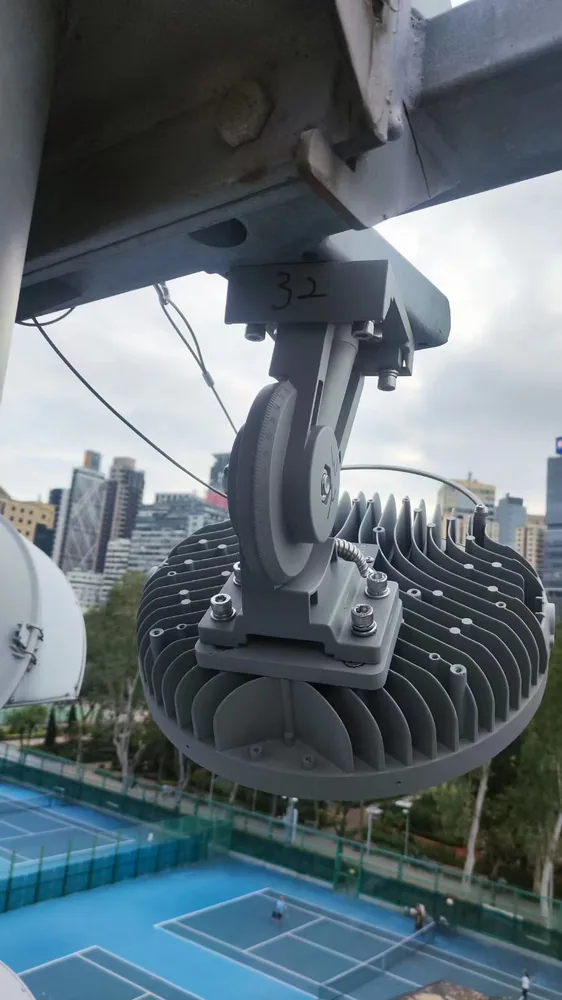
600 W Scorpius mounted on original cross-arm above a tennis court

One-for-one replacement of legacy metal-halide fixtures

On a knuckle bracket a 600 W Scorpius bolts onto the same cross-arm position as a 2000 W metal-halide lamp. No additional brackets, no new poles, no re-engineering of the structure — which is where the real money in a retrofit usually goes.

2000W MHreplaced by
600W LEDon the original mount
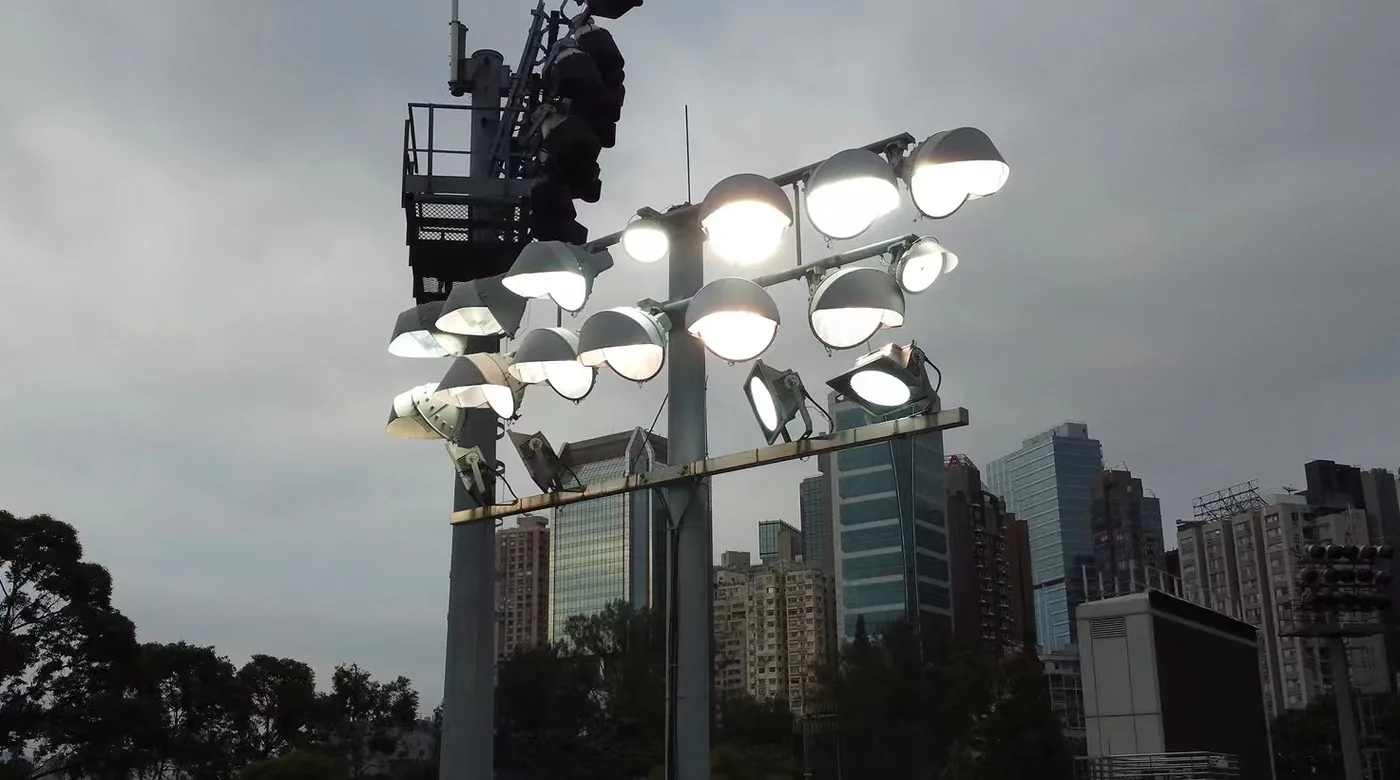
Cluster of legacy 2000 W metal-halide floodlights
Before — 2000 W metal-halide cluster
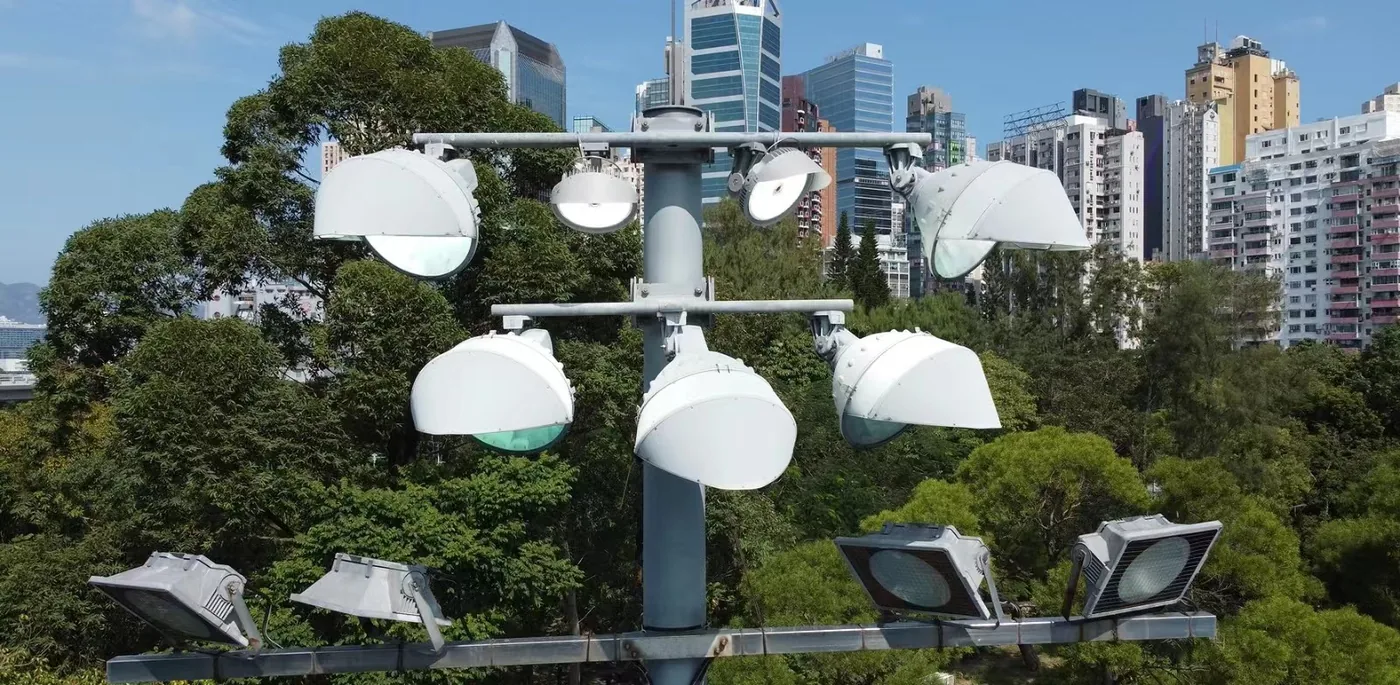
Same pole with EcoSport 600 W fixtures mixed with remaining MH lamps
During changeover — 600 W EcoSport beside remaining MH heads

Theme lighting & customization

Scorpius RGB fixture

Dynamic theme lighting — RGB, RGBA, RGBW

Cree® XLamp® XP-E2 LEDs in the Scorpius body, with the same visor, brackets and Synapse control as the white-light fixture.

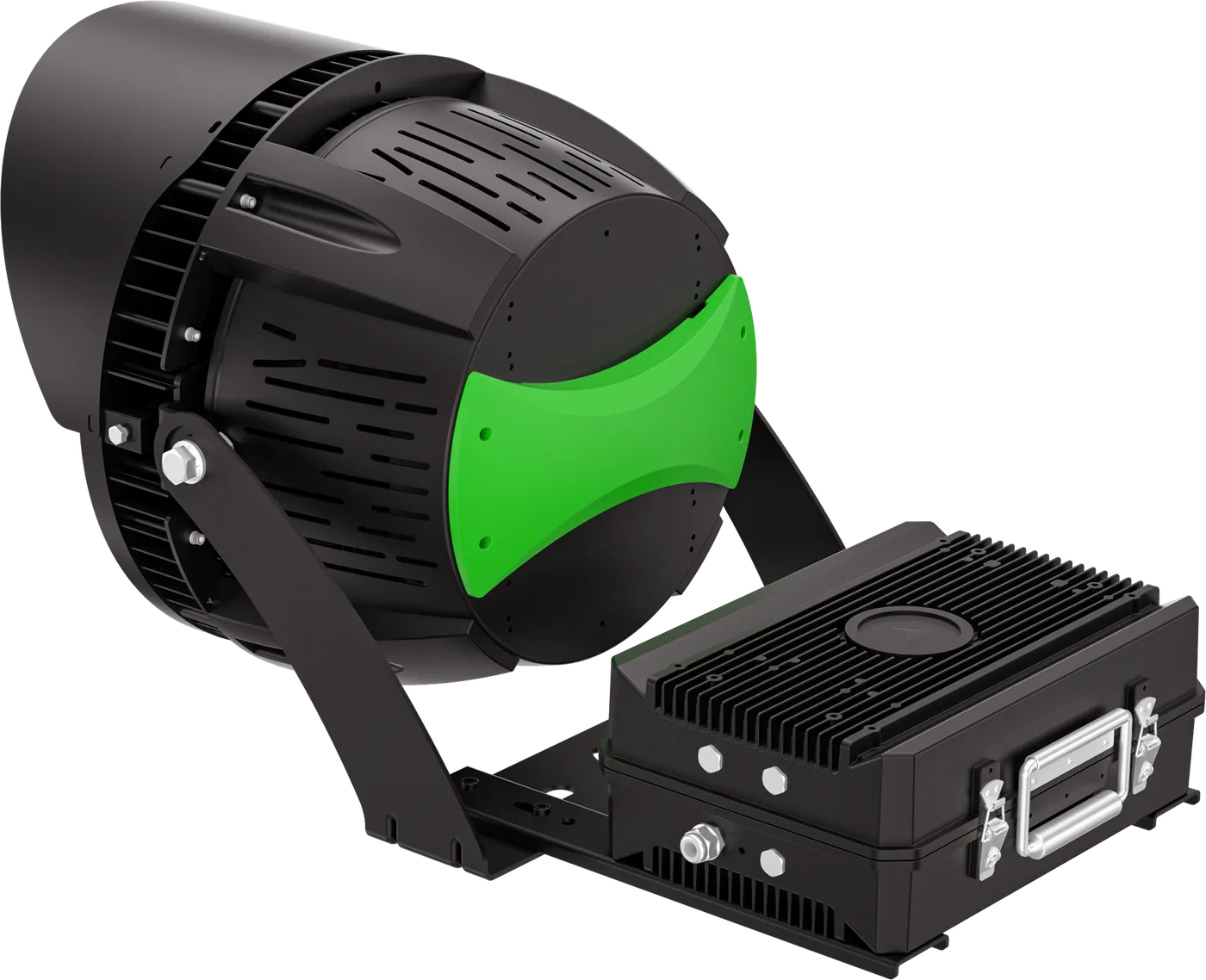
Scorpius with green accessory badge
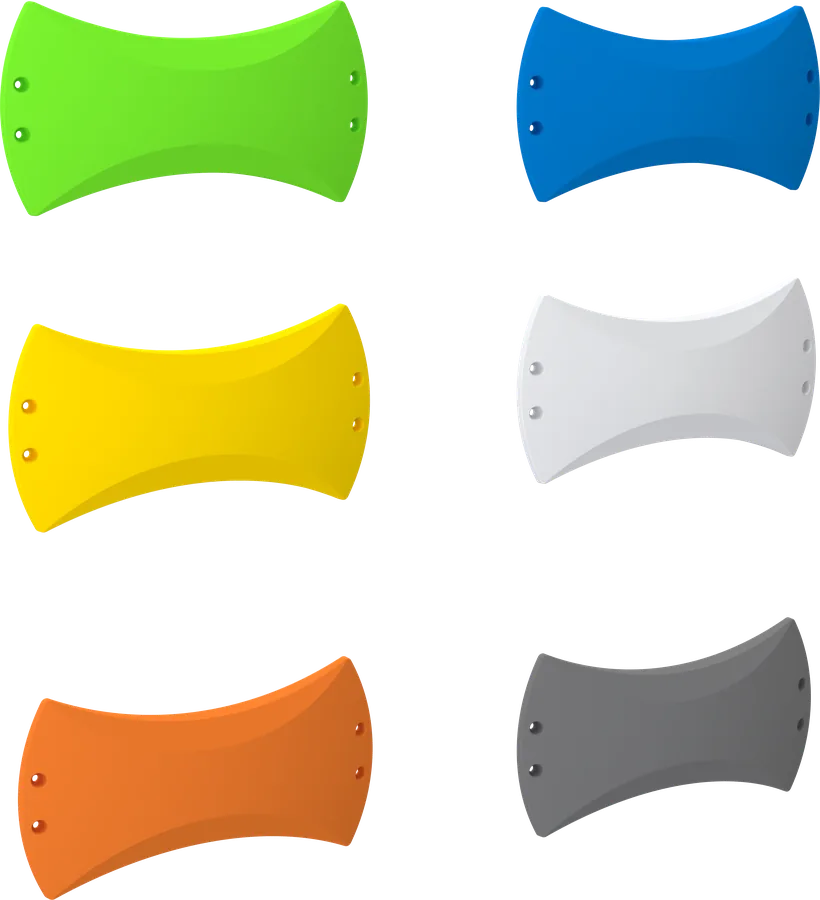
Badge color options: green, blue, yellow, white, orange, grey

School-color badge

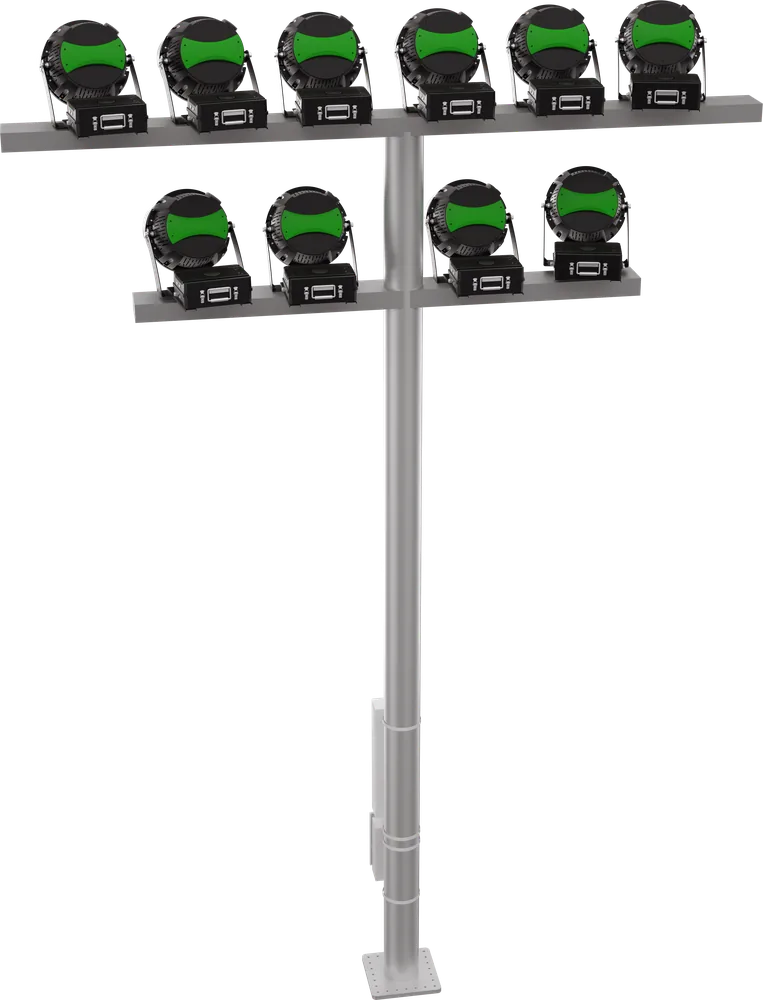
The accessory badge on the back of the fixture is customized to the school's Pantone color and can carry an embossed logo — so a bank of Scorpius heads reads as the home team's from the parking lot.

Pole with ten badged Scorpius fixtures

Optional features

Synapse controller configurations by wattage band.

Applications

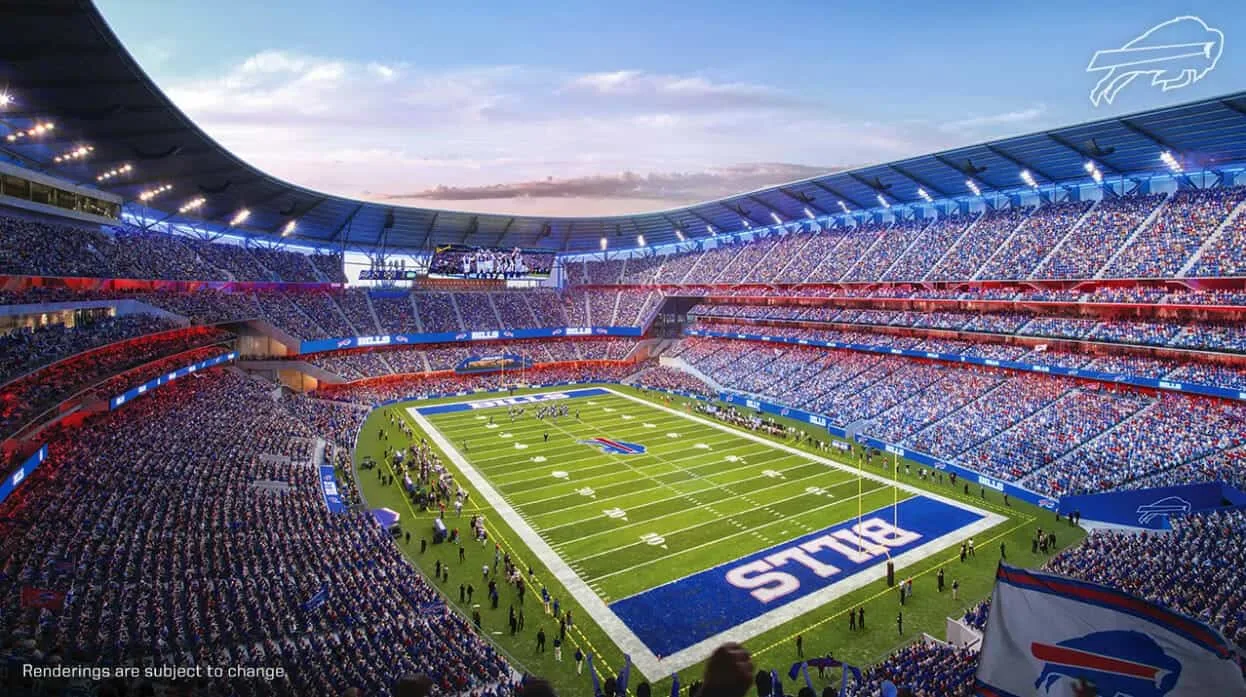
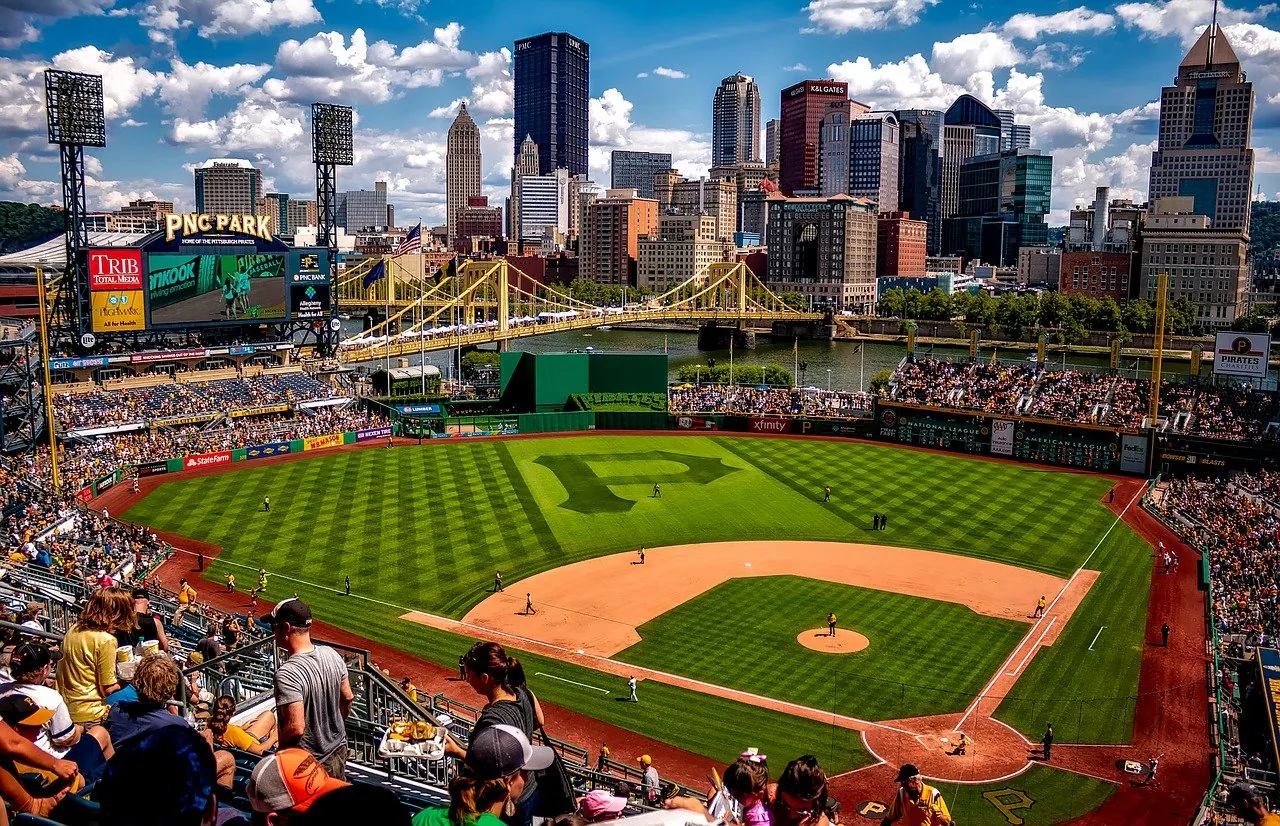
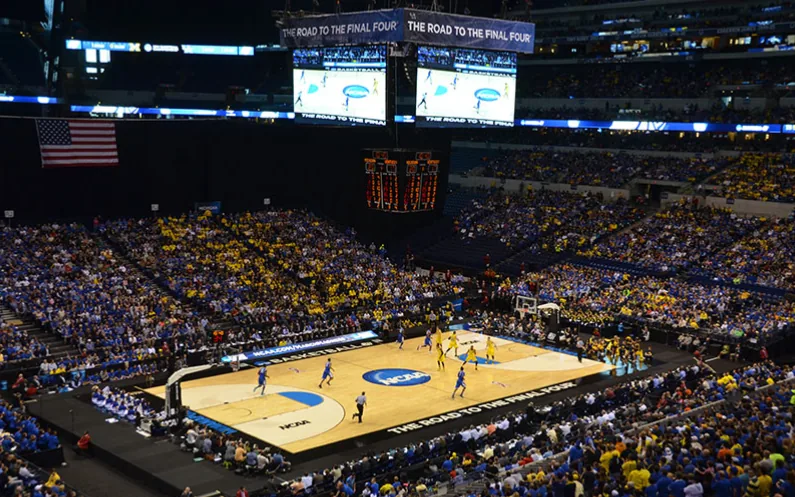
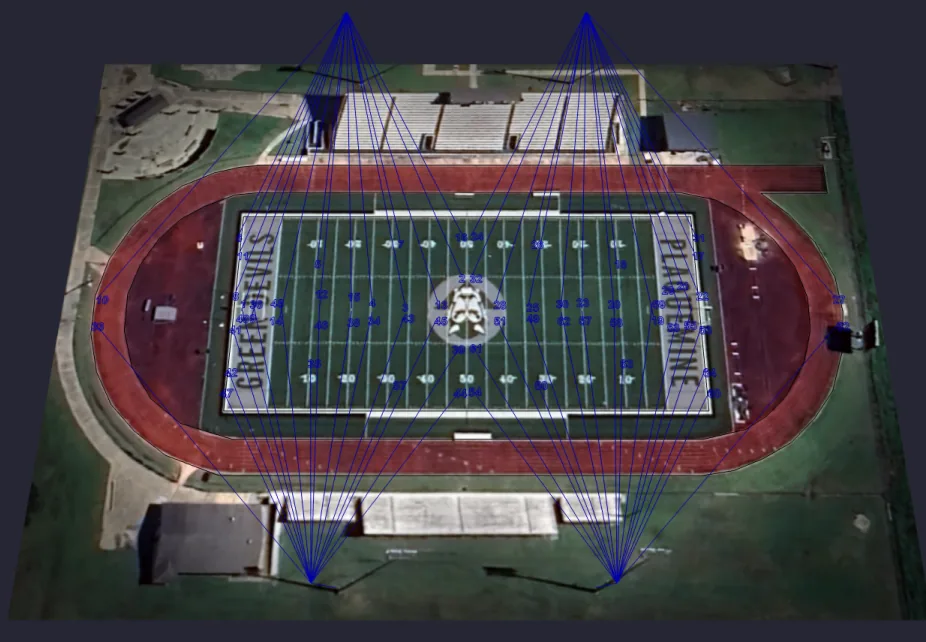
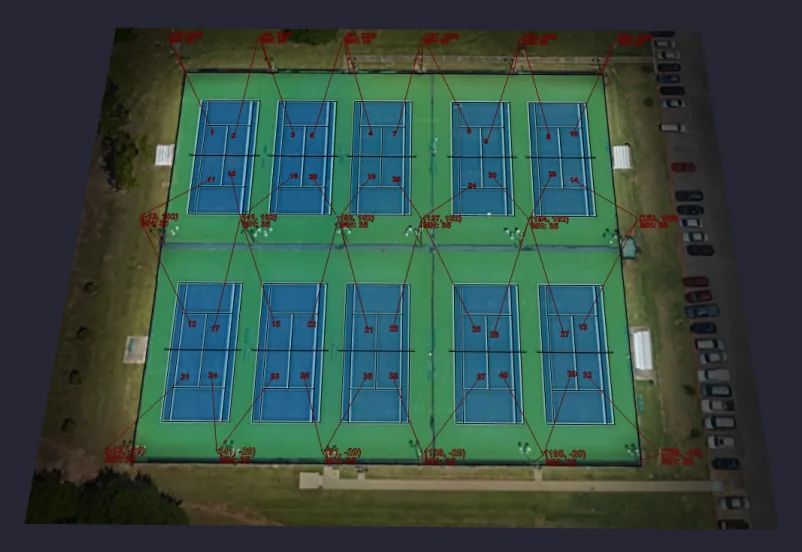
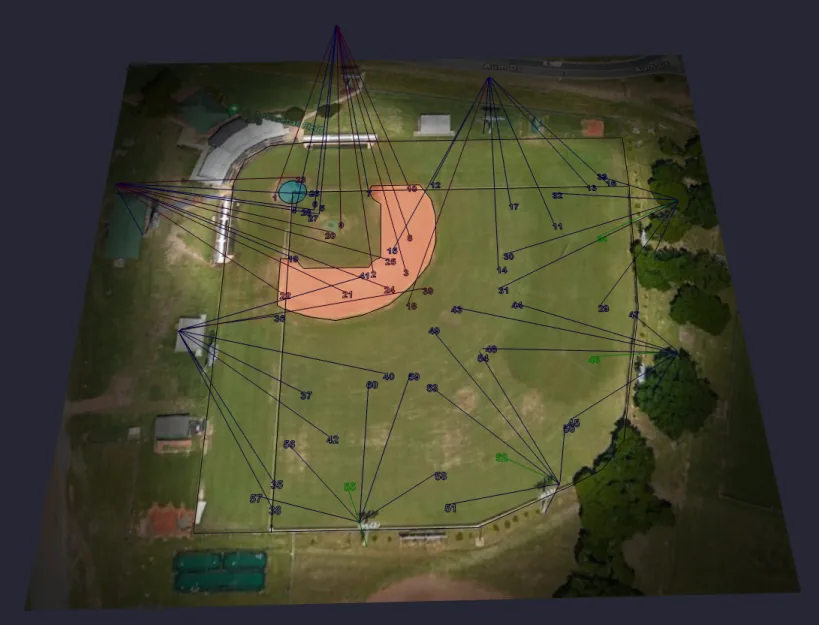
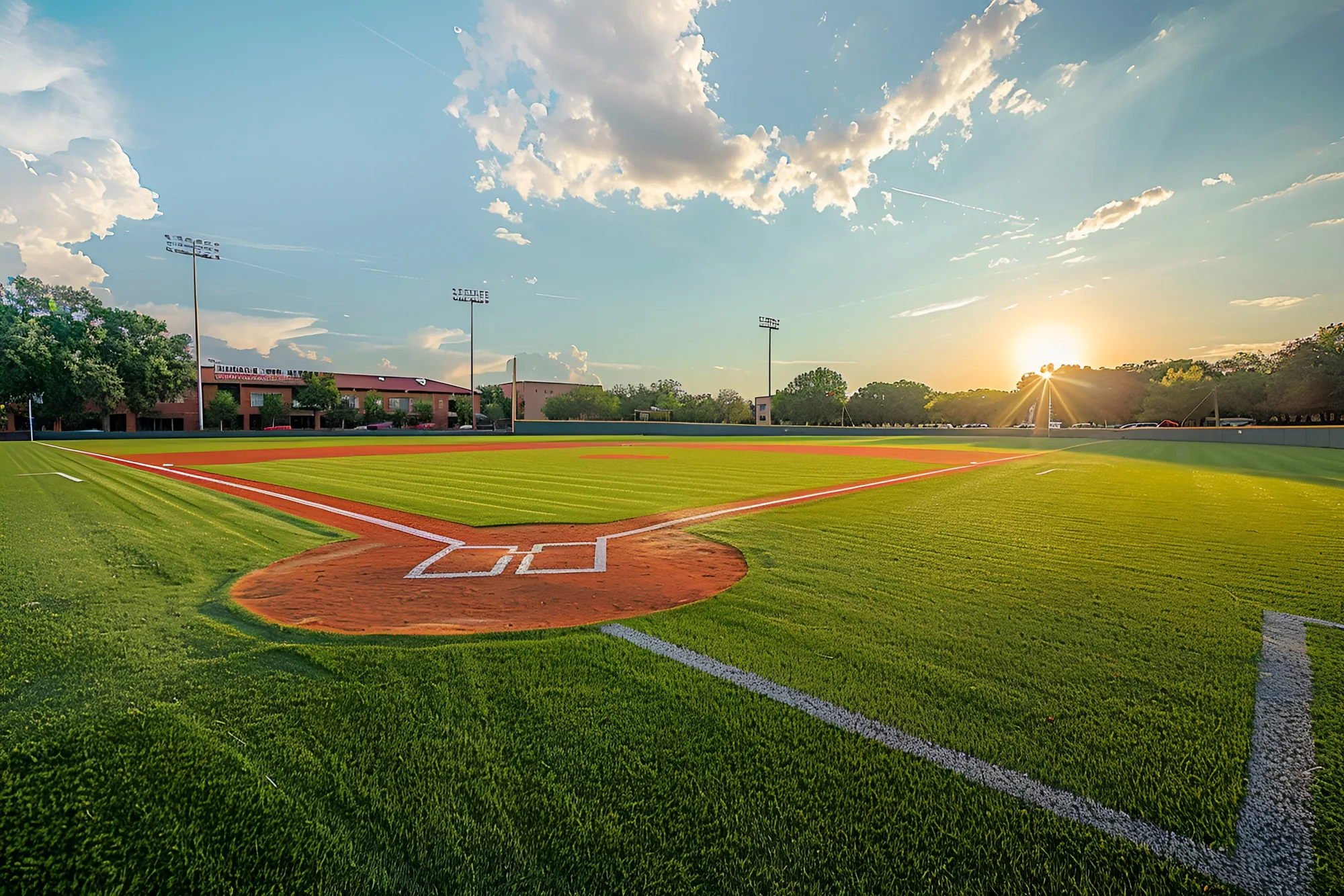
Football, baseball, soccer, indoor arenas, tennis and pickleball: EcoSport fixtures are installed at more than 1,500 athletic facilities worldwide, and rank first in the sports-lighting market on illumination, uniformity, glare and overall value.

1,500+

athletic facilities lit with EcoSport fixtures, across every field sport and indoor arena type.

Remote driver system

ECO NXS
Failsafe
System®

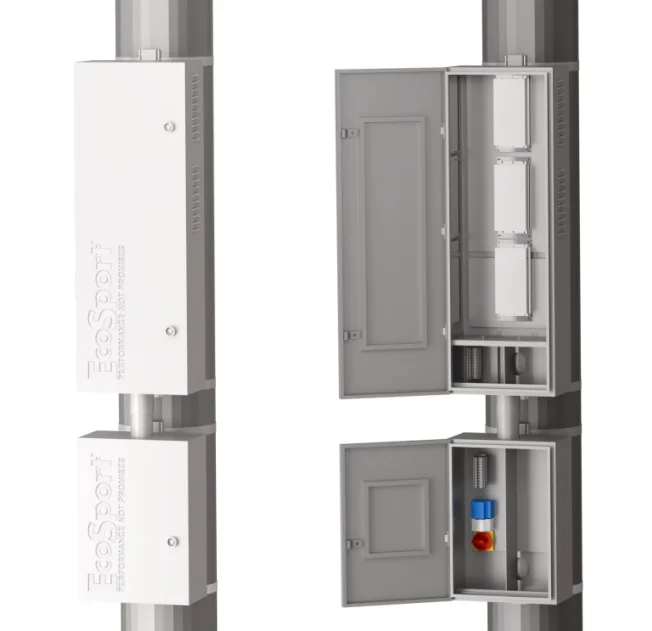
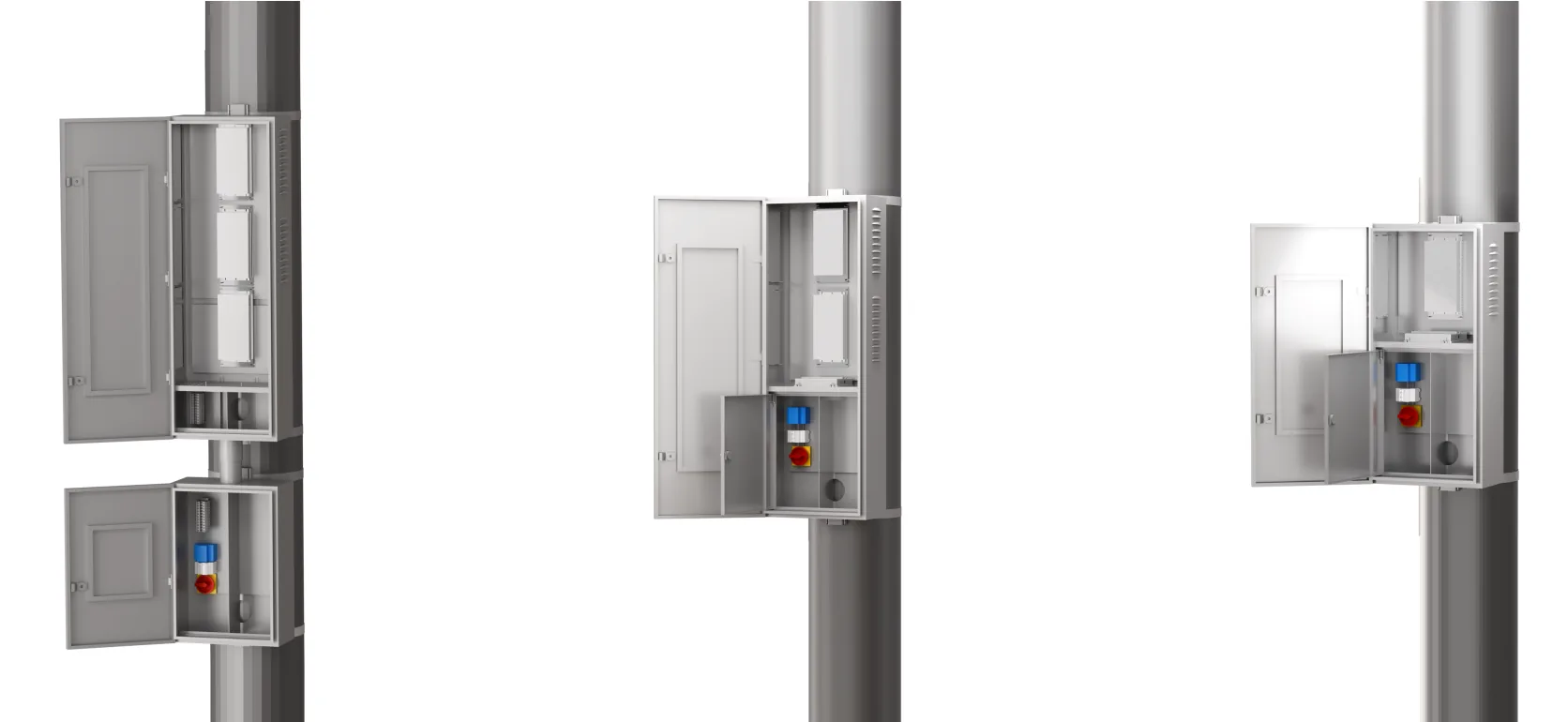
Drivers, controller and disconnect live in a cabinet at the base of the pole, not on the fixture — so the serviceable electronics are at ground level, not at the top of the pole.

cULus Listed markcULus ListedCabinet assemblies
ECO NXS Failsafe cabinets on a pole, closed and open

Cabinet sizes

Cabinets are sized by driver count and total load. The circuit-breaker cabinet (A) provides the disconnect; B, C and E carry drivers plus the switch.

Cabinets B, C and E shown open on poles, with cabinet A below cabinet B
Failsafe cabinet capacities
CabinetContentsMaximum load
Cabinet ACircuit breaker only—
Cabinet B9 drivers + circuit breaker10,800 W
Cabinet C6 drivers + circuit breaker7,200 W
Cabinet E3 drivers + circuit breaker3,600 W
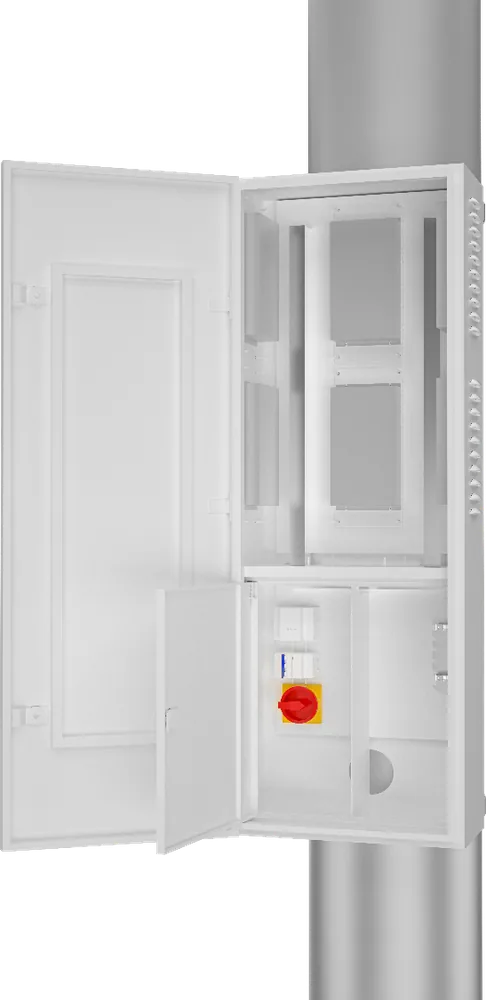
Open cabinet showing driver bay and switch bay
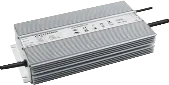
LED driver
Synapse controller
Eaton

What's in the cabinet

  • Antenna on the cabinet top for the wireless controller
  • Synapse controller and LED drivers in the upper bay
  • Eaton circuit breaker in the lower bay — the lockable disconnect
656ftmaximum run from cabinet to fixture (200 m)
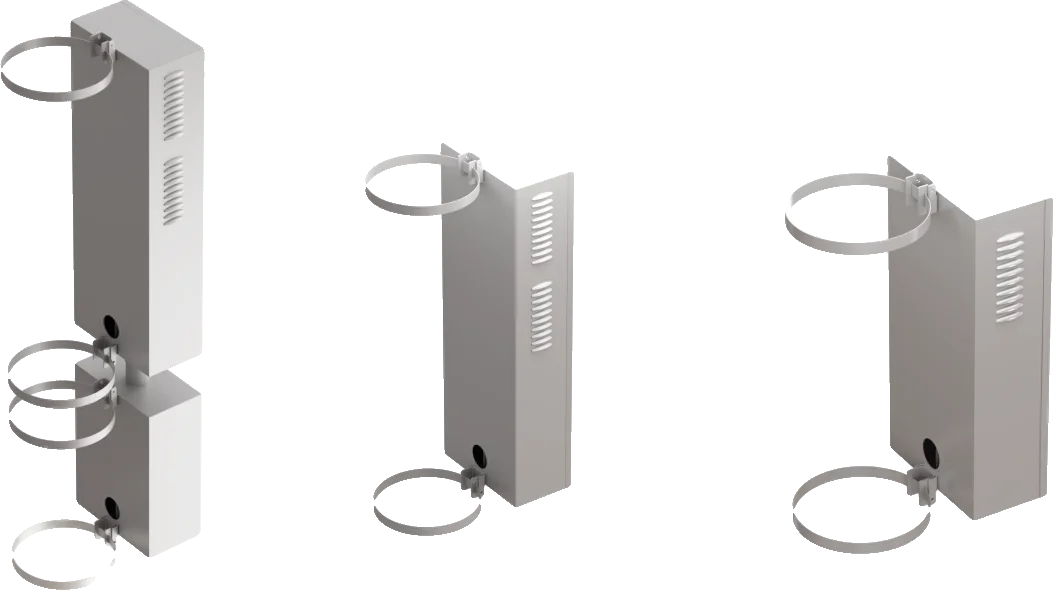
Standard remote driver cabinet enclosures A+B, C and E with pole bands

Standard remote driver enclosures

Enclosures band directly to the pole. Cabinet A stacks below B; C and E are single units.

8–25.5inpole diameter range (200–650 mm)

How the fixtures are made

Production
& Quality
Assurance

Every heatsink is forged or cast, machined, cleaned and coated in-process, and every fixture is pressure-tested, aged and rain-tested before it ships.

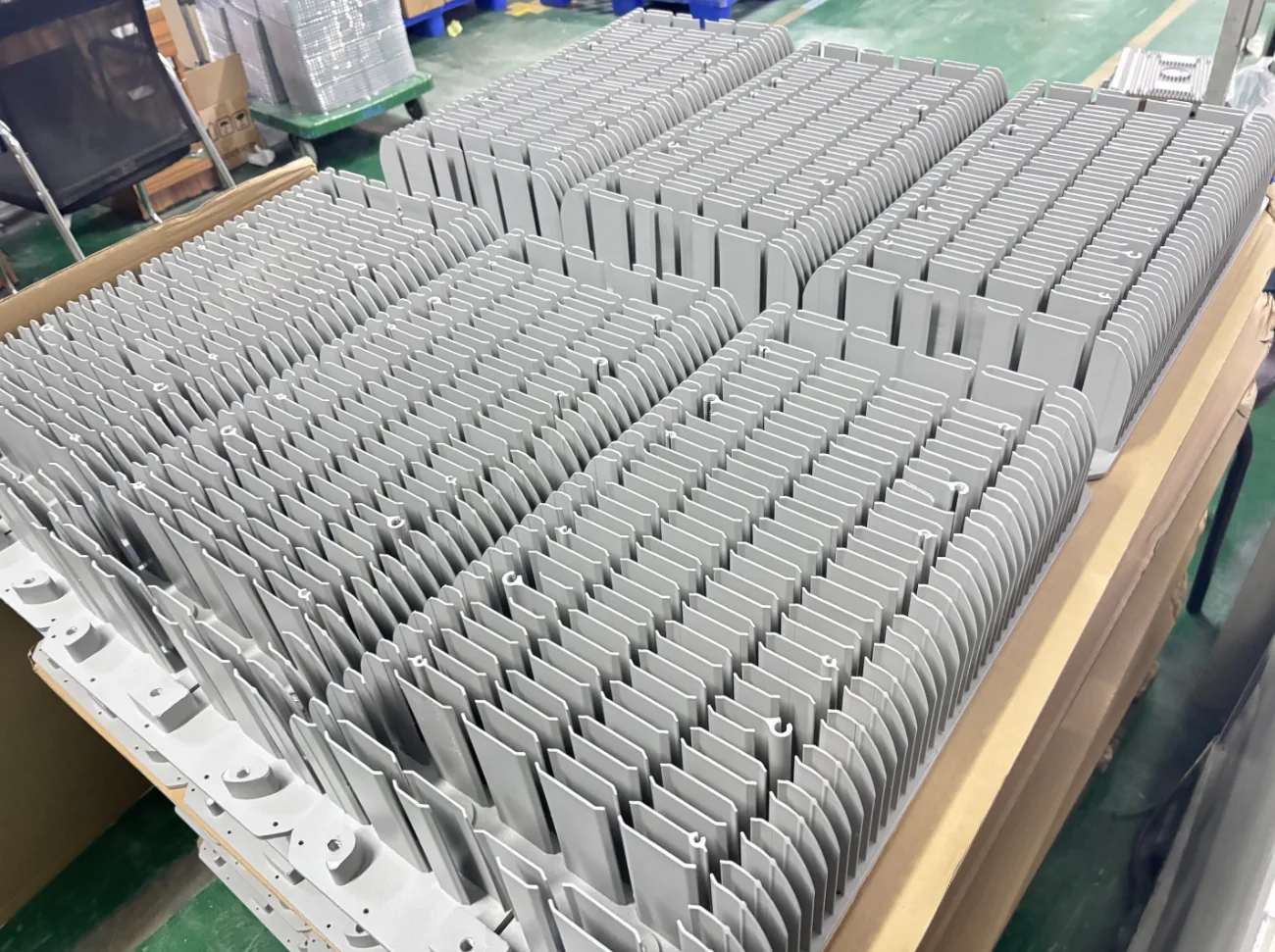
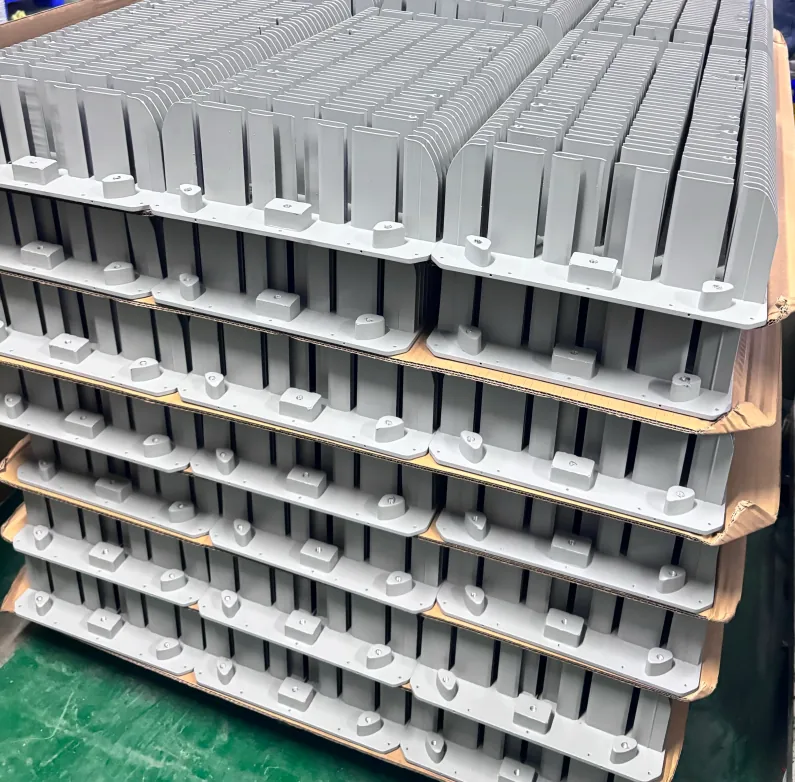
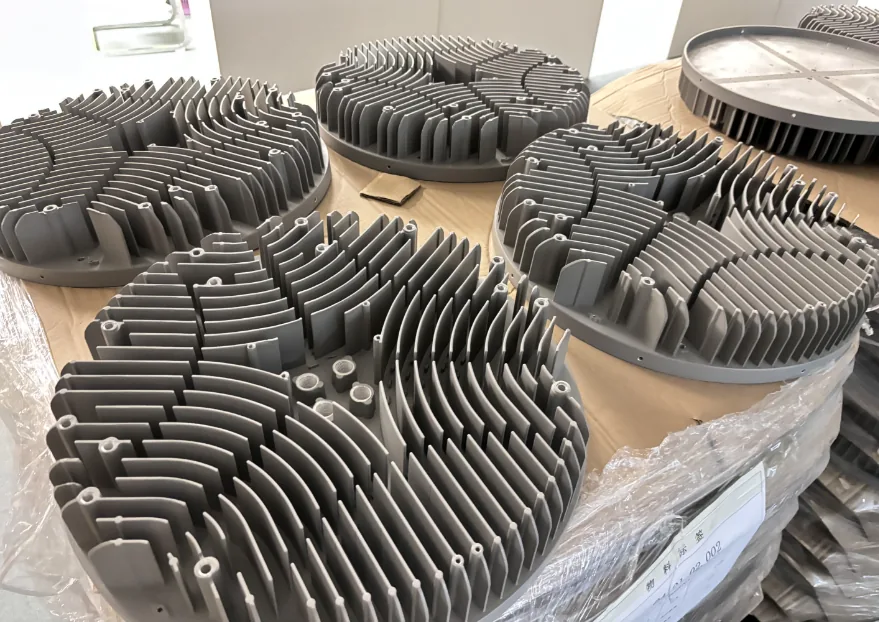
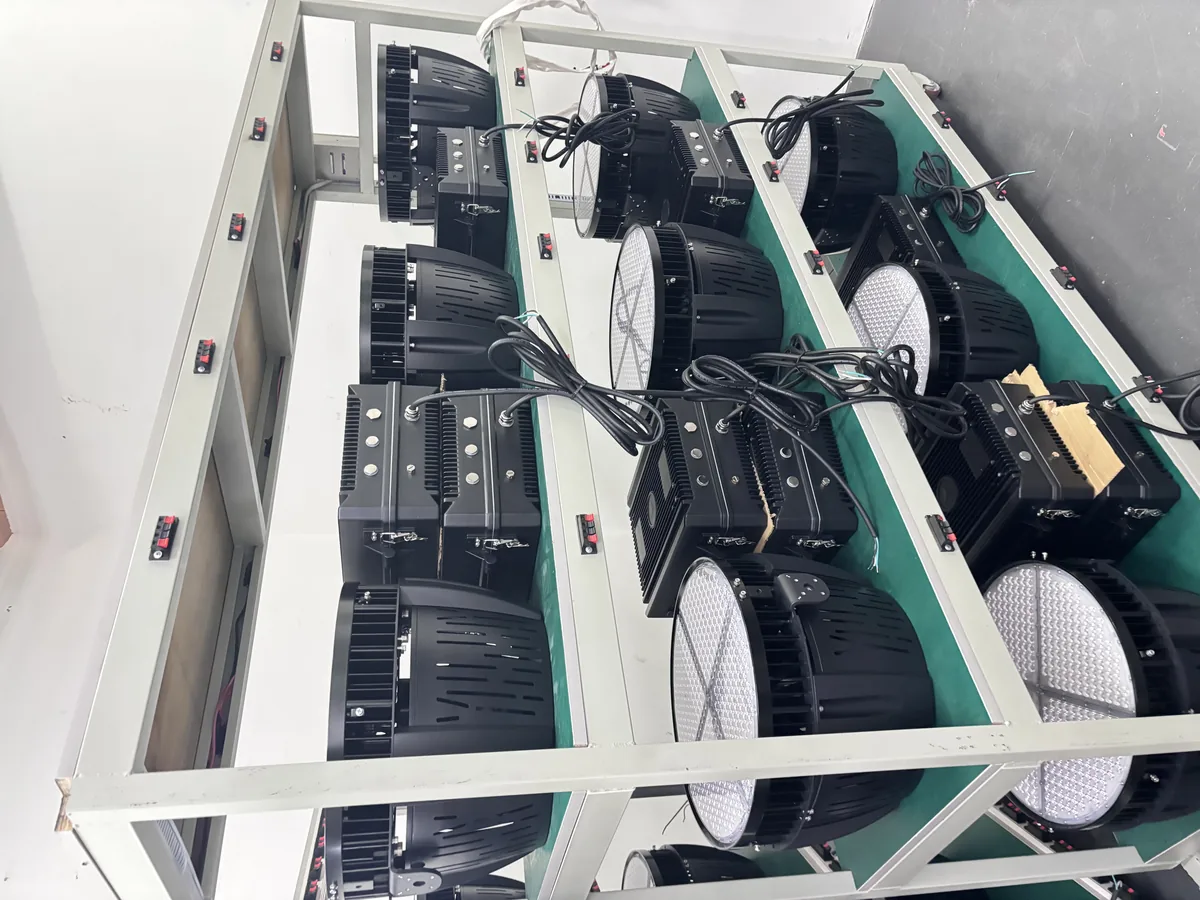
Finished Apollo heatsinks on pallets

Cold forging

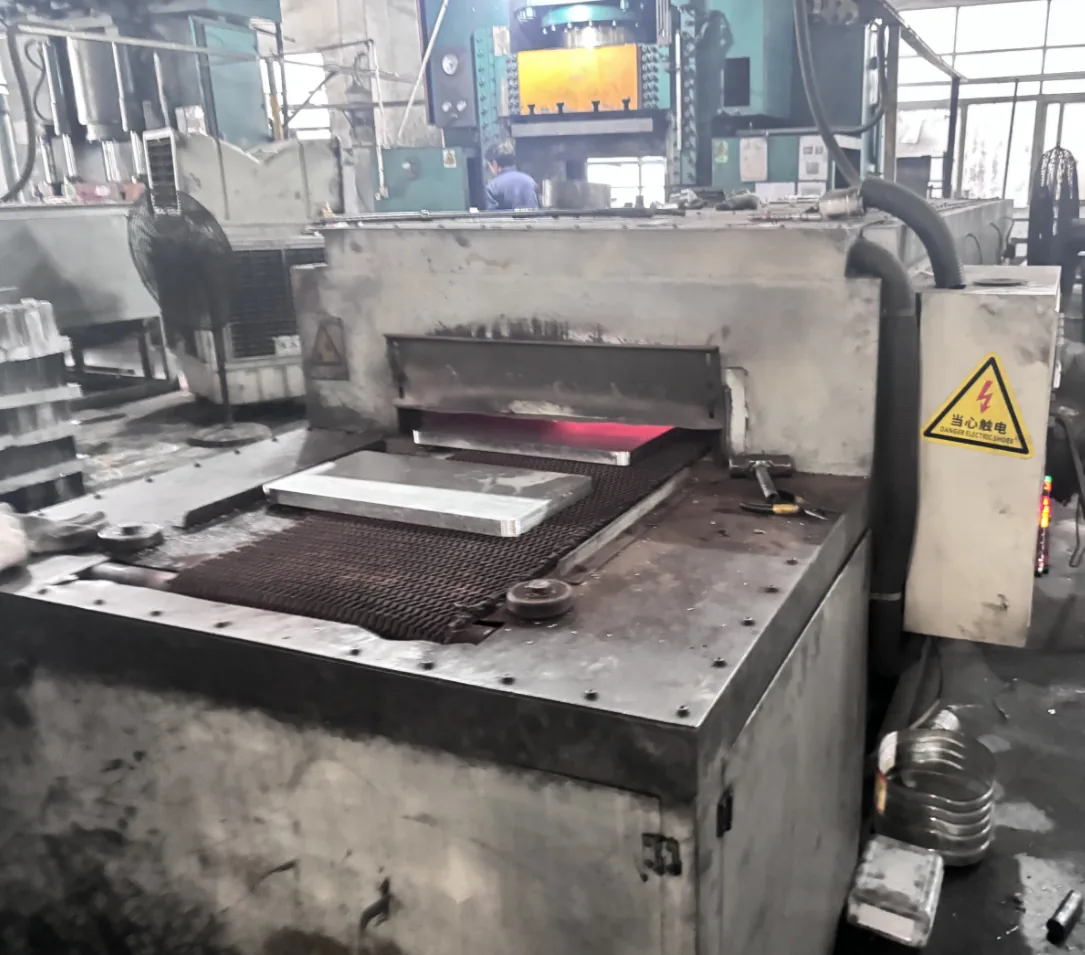
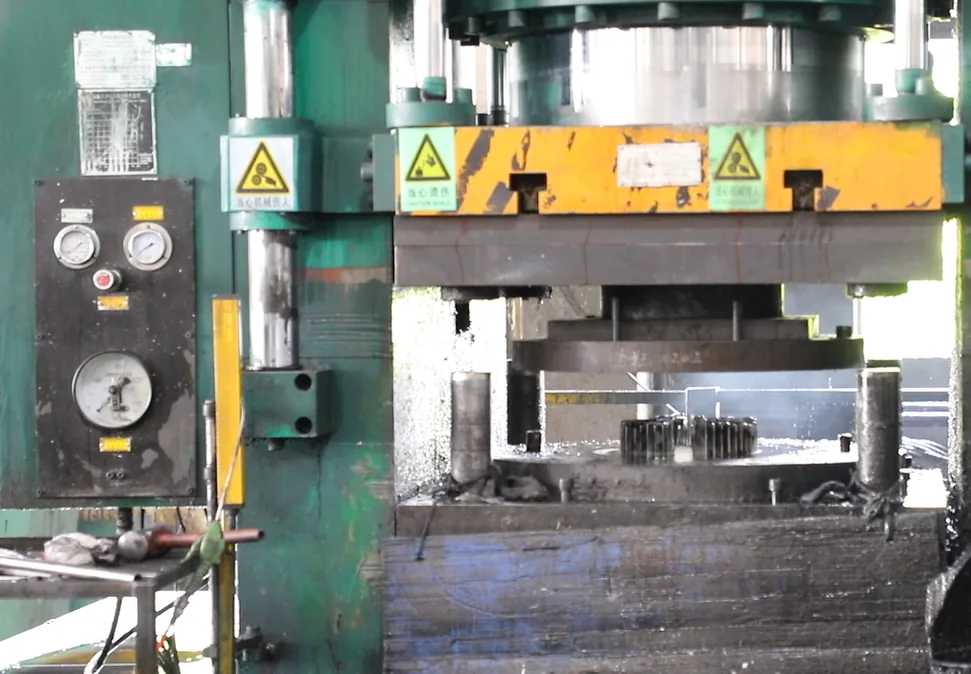
Apollo heatsinks and the 750 W-and-up Scorpius heatsinks are forged from 1070 billet.

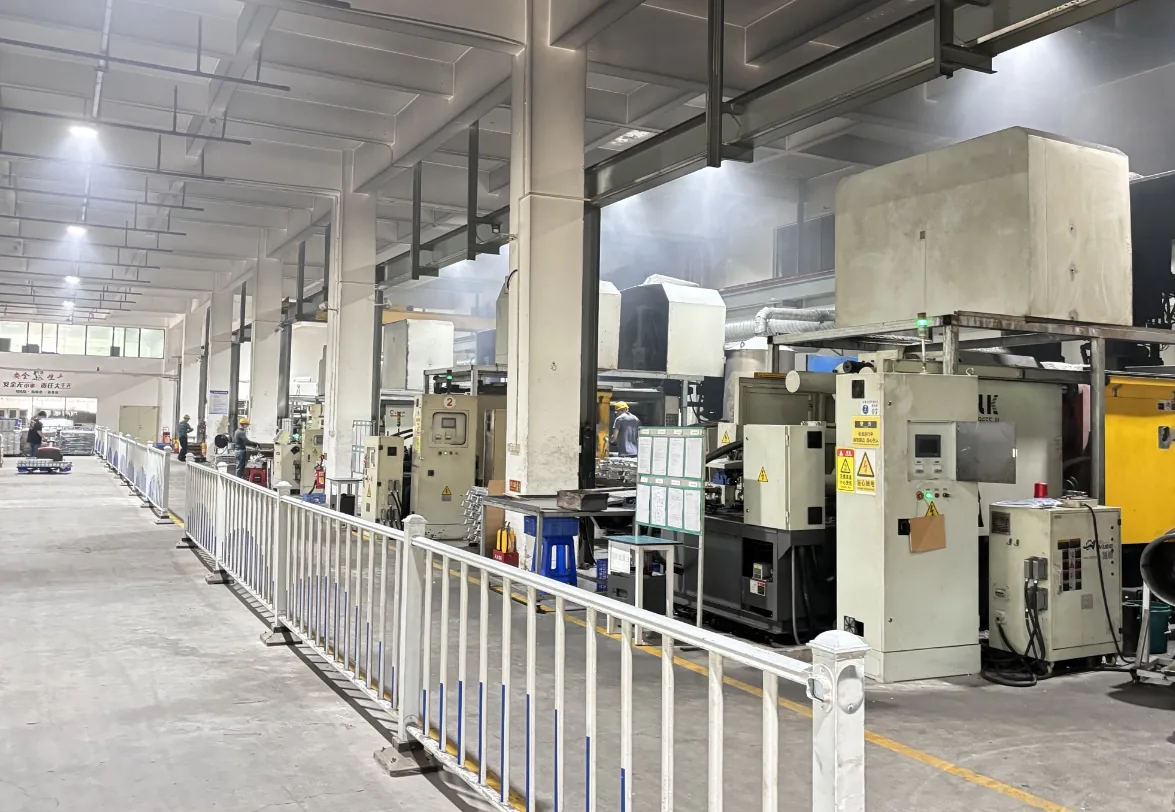
Forging hall
Cold forging factory
Billet heating before forging
Raw material heatingHeat-forging machine
Forging press
Custom-designed forging machine
Raw forged round heatsinks
Raw forgingBefore surface treatment

Die casting

Scorpius 300–600 W heatsinks are cast in ADC12.

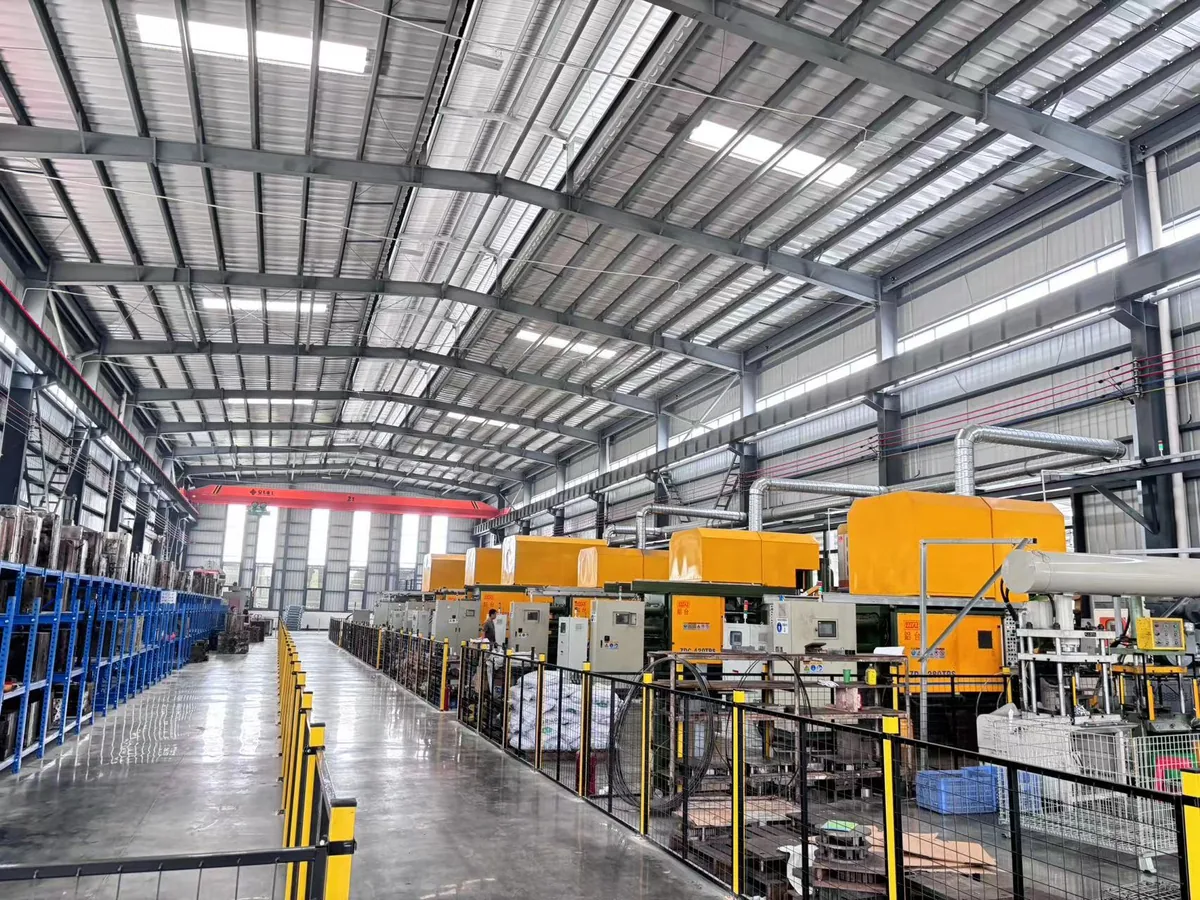
Die casting hall
Die casting hall
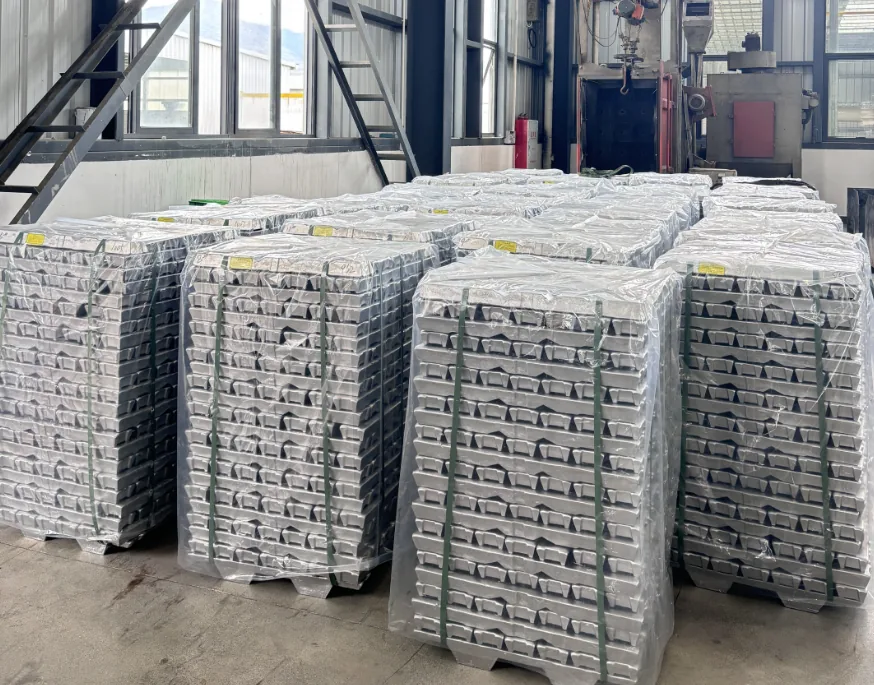
Aluminum ingots on pallets
Raw aluminumIngot stock
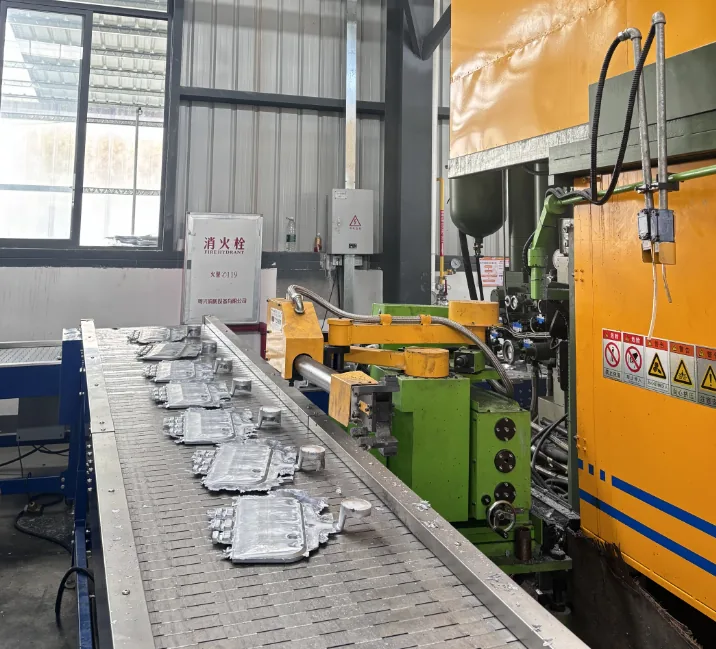
Die casting machine output
Custom die-casting machine
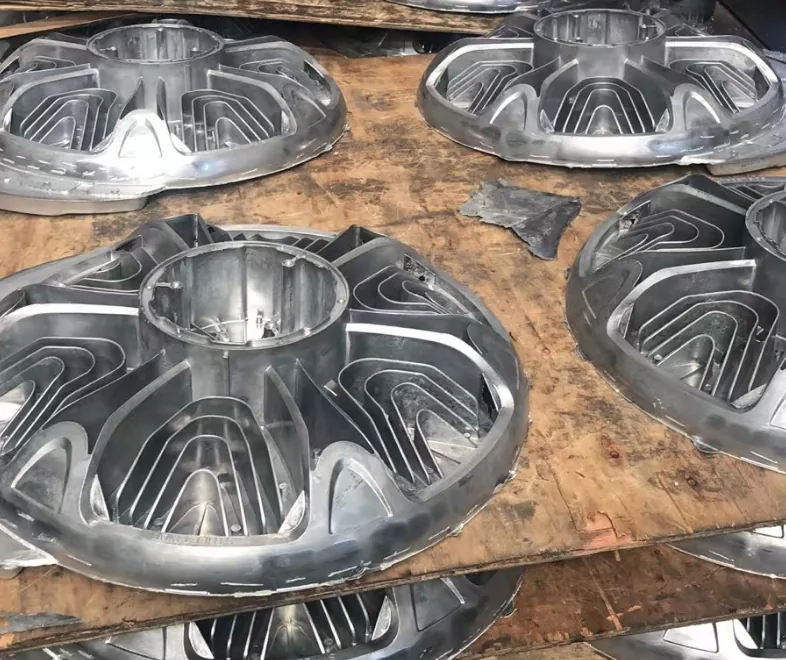
Raw cast round heatsinks
Raw castingBefore polishing

Machining, surface treatment & powder coating

Hand polishing a heatsink
PolishRemoves burrs and surface imperfections
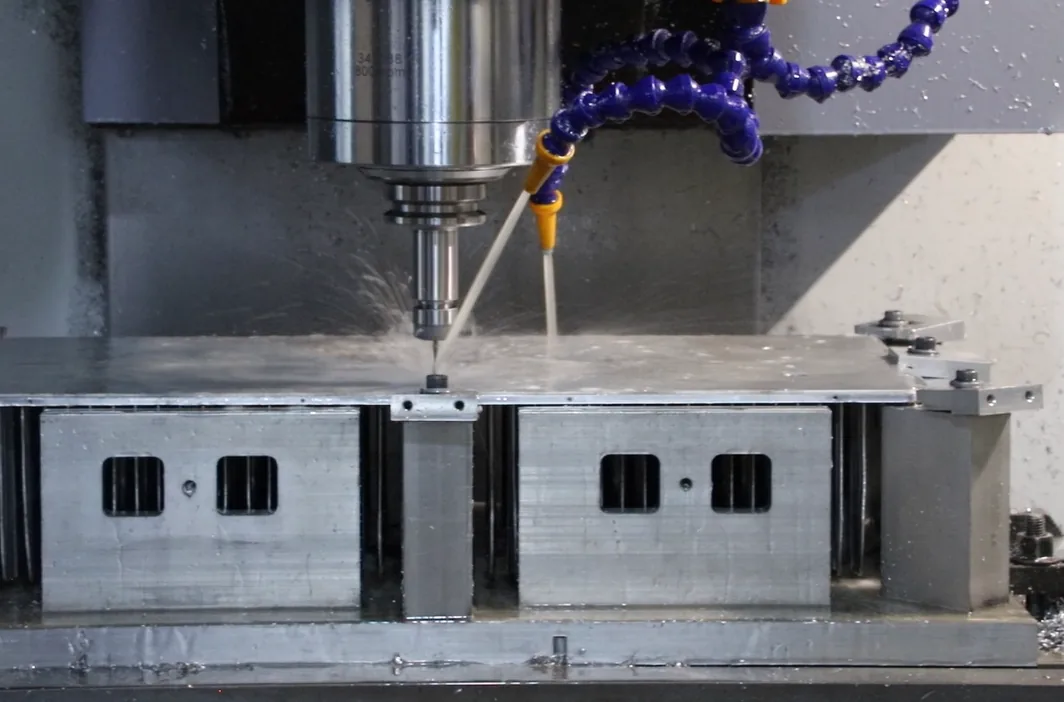
CNC drilling a heatsink
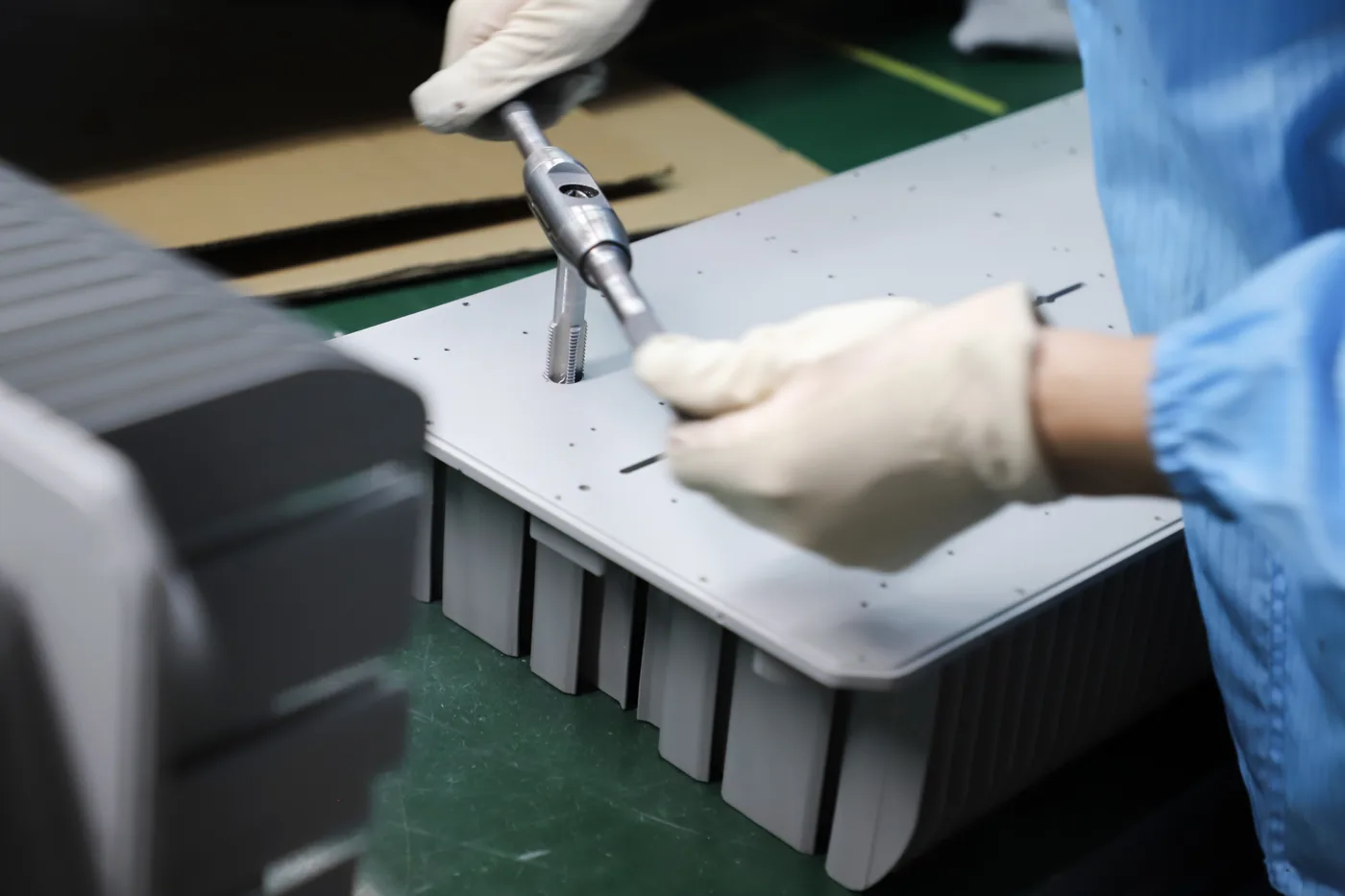
CNC machiningDrilling and tapping
Ultrasonic cleaning bath
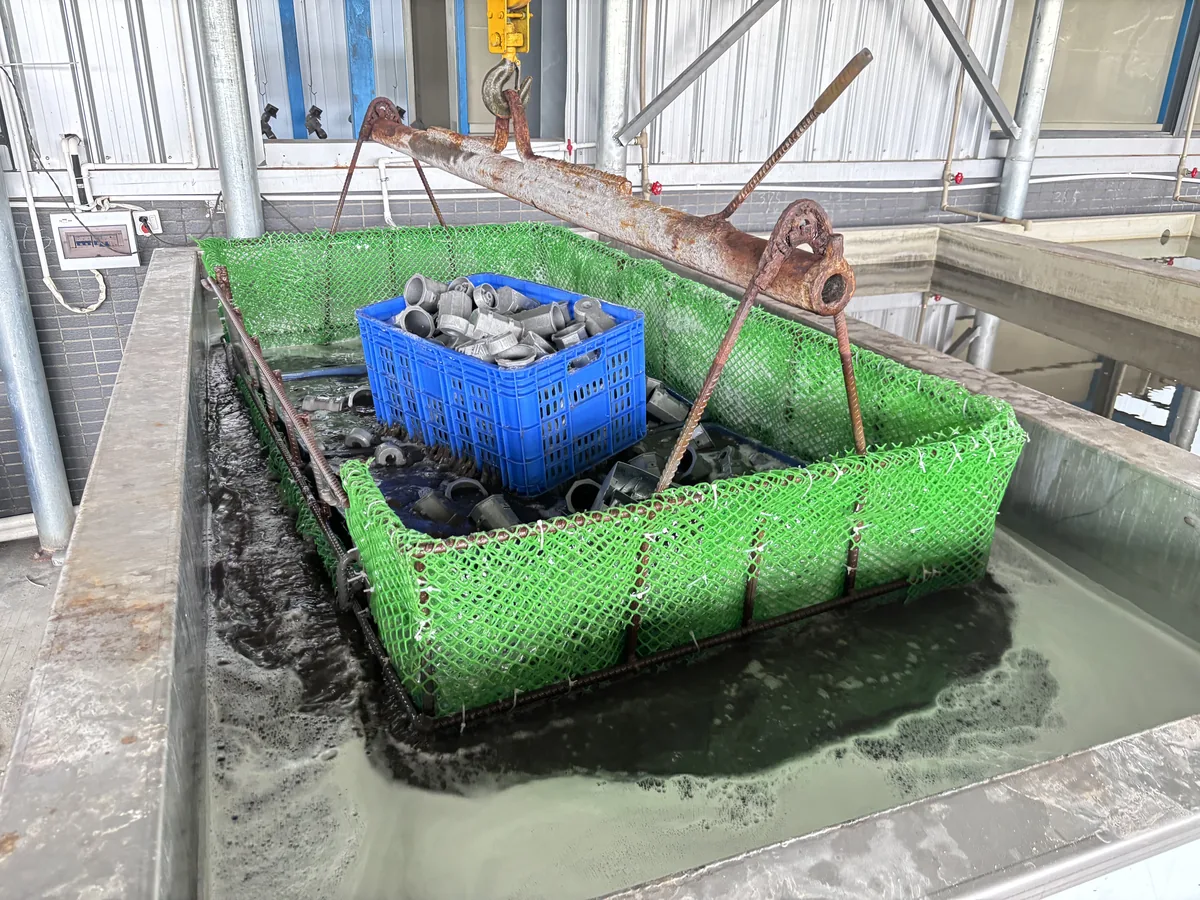
Ultrasonic + alkaline cleaningPretreatment before coating
Powder coating a heatsink
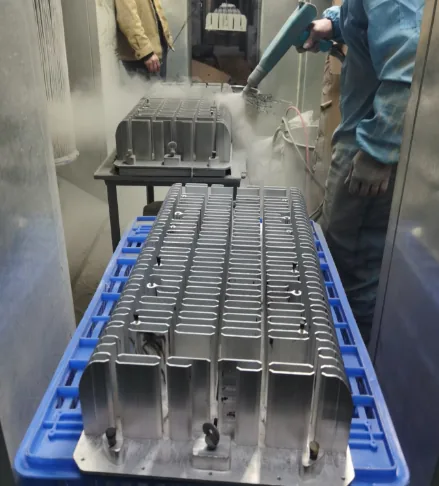
Powder coating
Heatsink in the baking oven
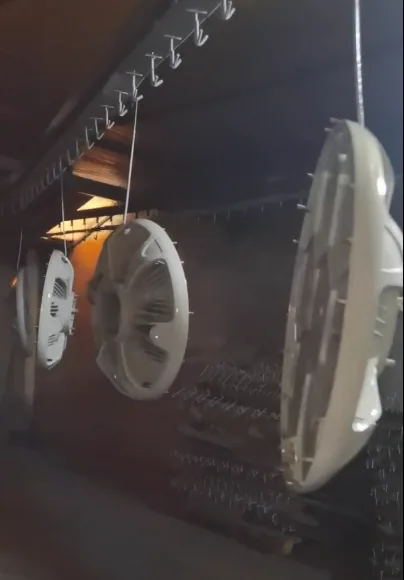
Bakingheat-cured finish
Finished coated heatsinks
Processed heatsinkReady for assembly

Quality assurance

Every component is inspected — several times — during production and testing, and every finished fixture passes final inspection before it is packed.

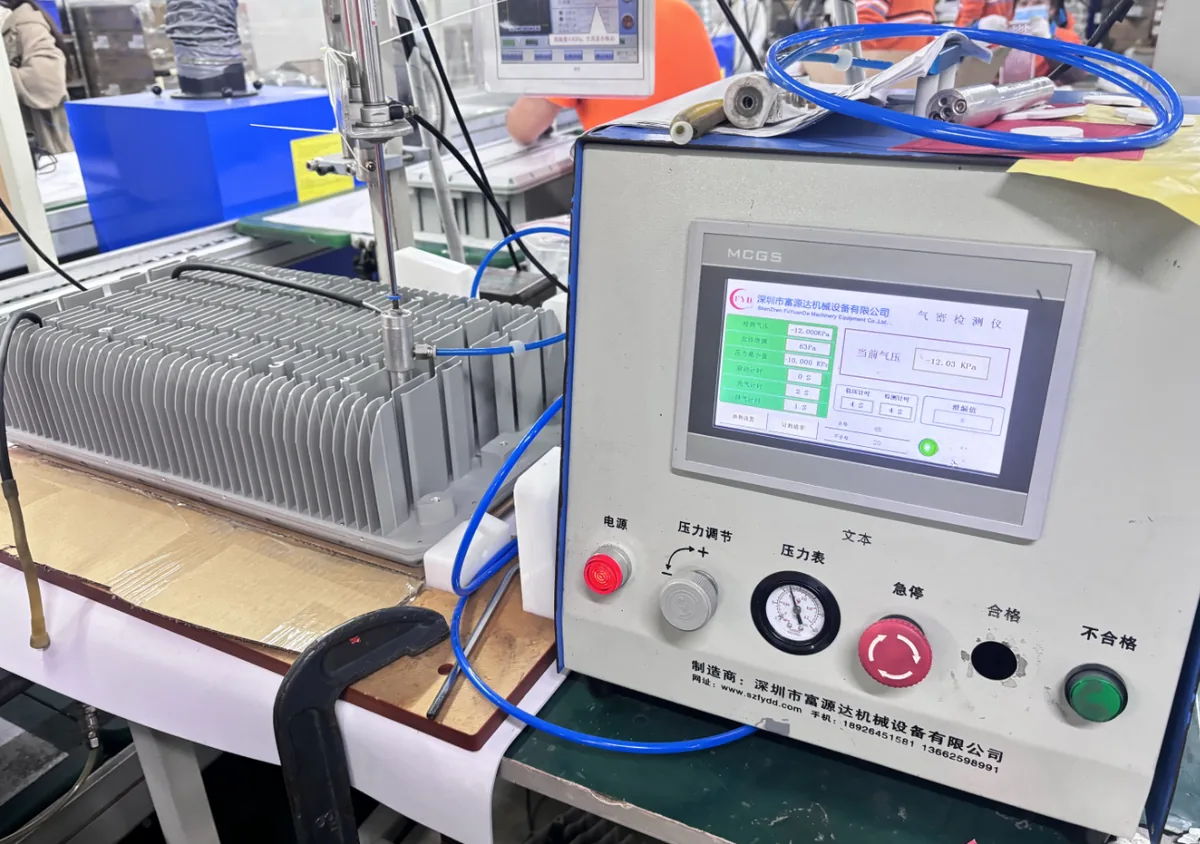
Airtightness tester connected to a heatsink
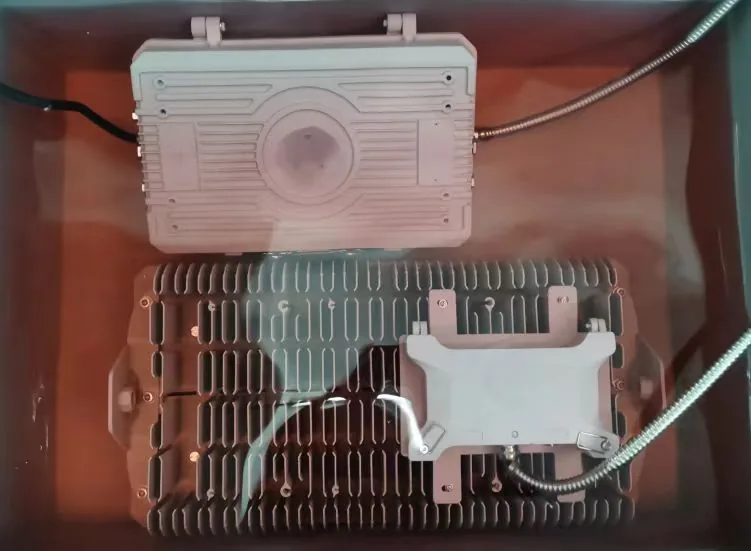
Fixture submerged in a soak tank

100 % airtightness test

Pressure testing is a more reliable proof of waterproofing than a spray test alone, and it catches porosity in a housing before the fixture is built — so it is filled, not shipped. Every fixture is pressure-tested; a sample is soak-tested after aging.

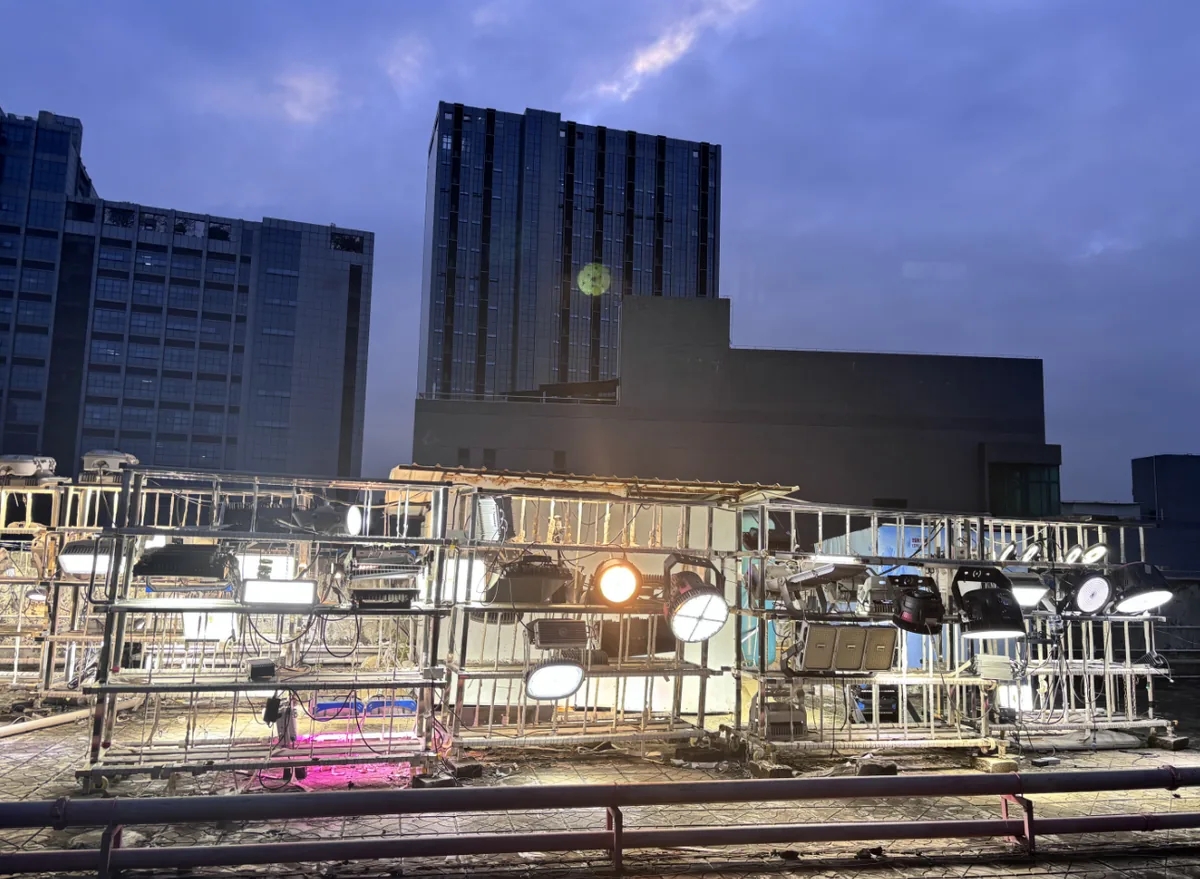
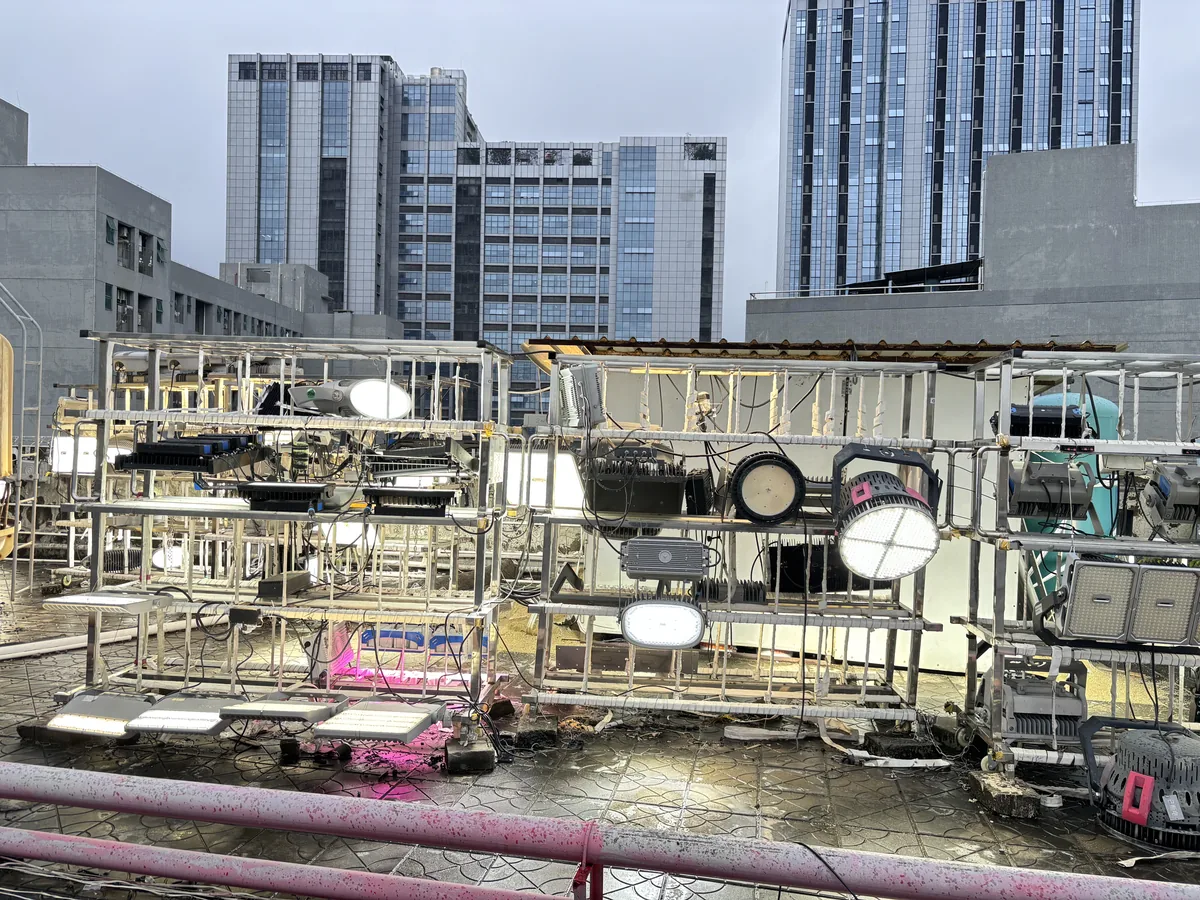
Rooftop aging rack at night, fixtures lit
Rooftop aging rack by day

Lifetime outdoor aging test

Fixtures on the rooftop test rack have run 24 hours a day for more than seven years without a single failure. At a typical sports-lighting duty of 1,600 hours a year, that is the equivalent of more than 38 years in service.

7+ yrcontinuous 24-hour operation
38yrequivalent field service at 1,600 h / yr
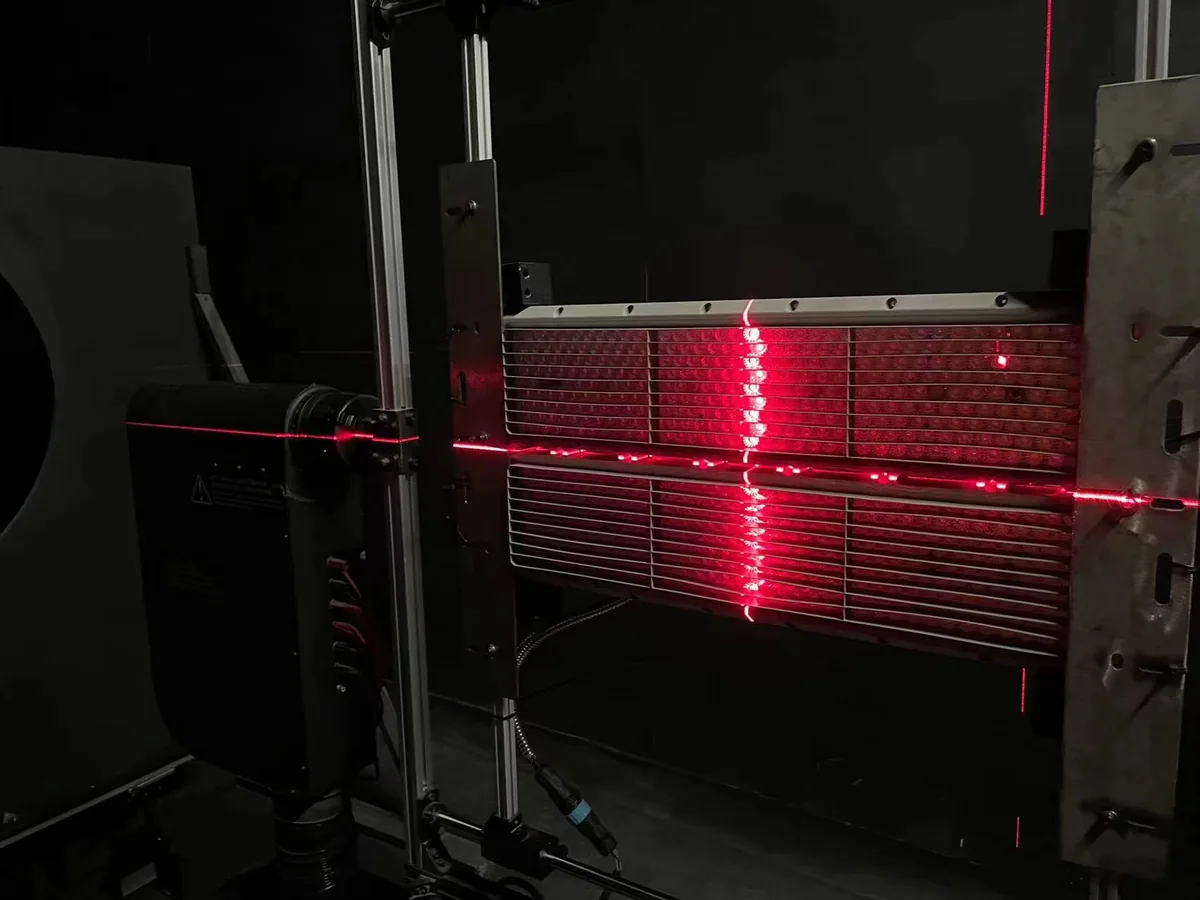
Laser alignment on a goniophotometer
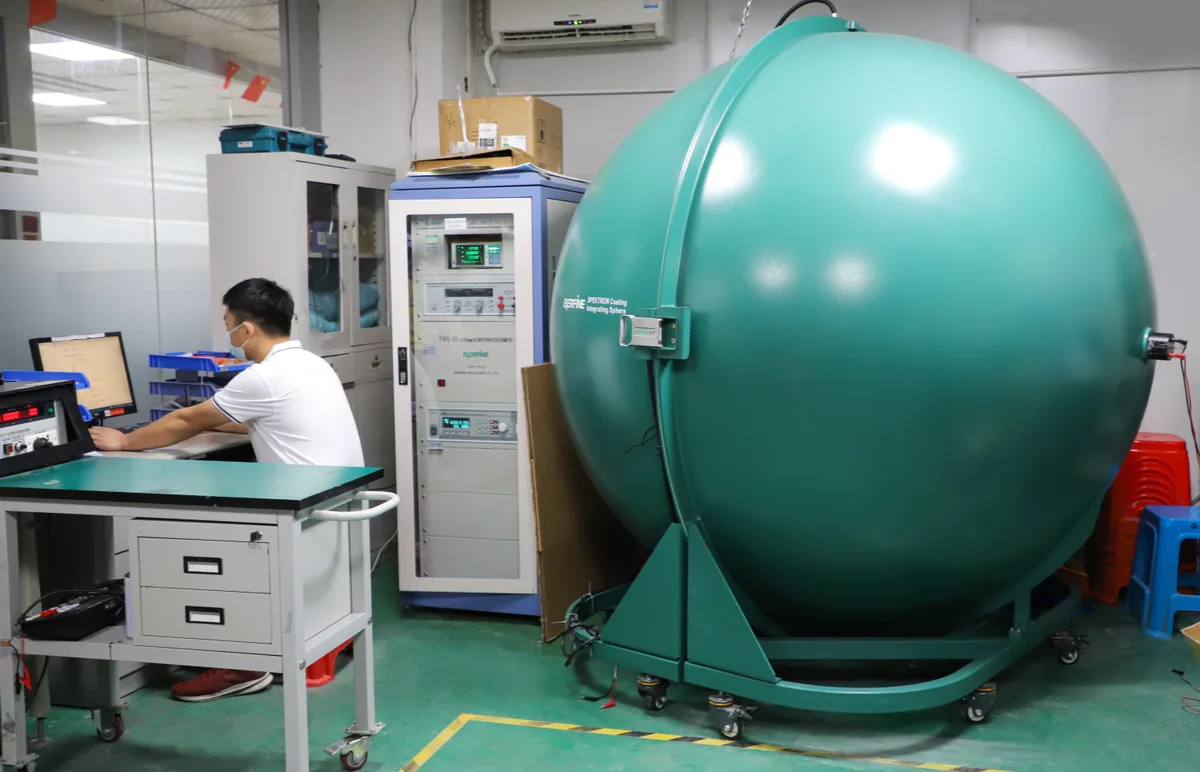
Integrating sphere
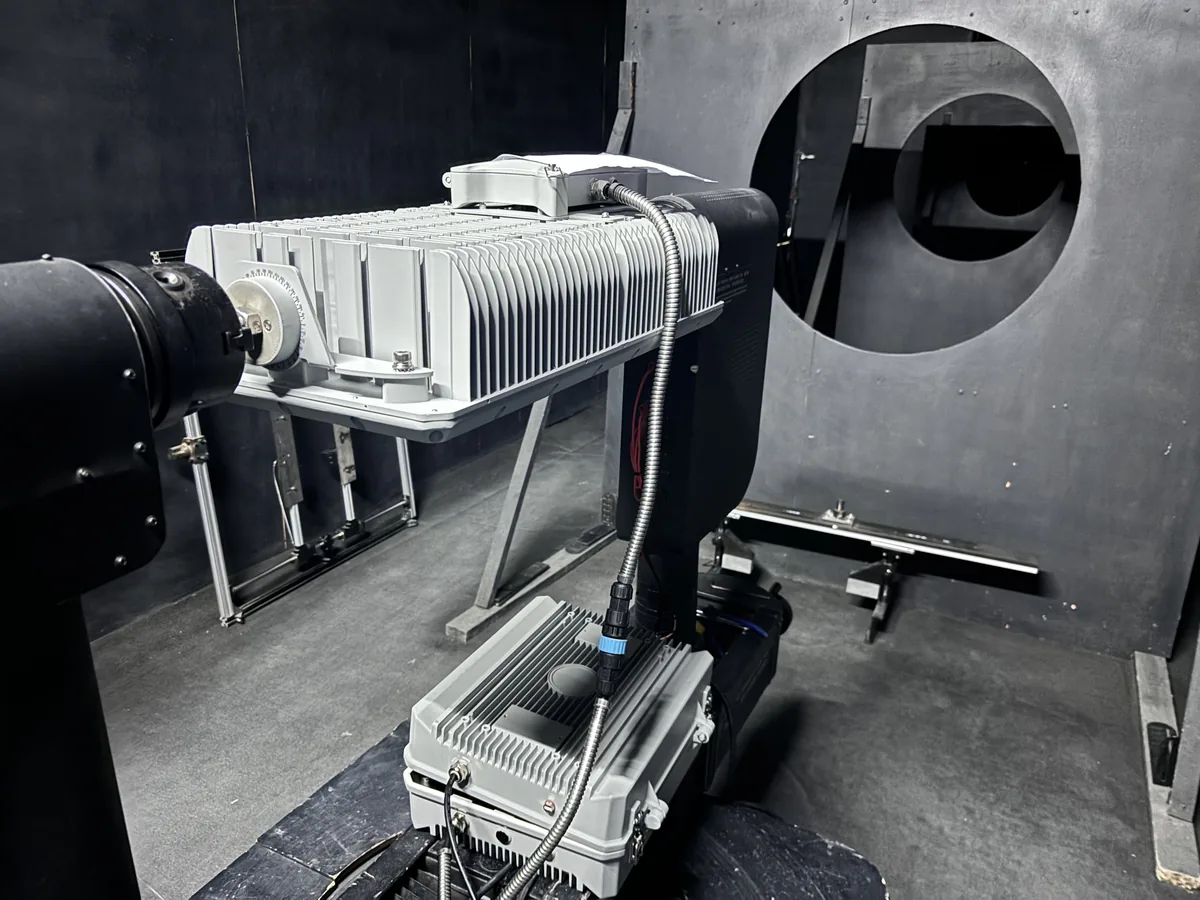
Fixture mounted on the goniophotometer
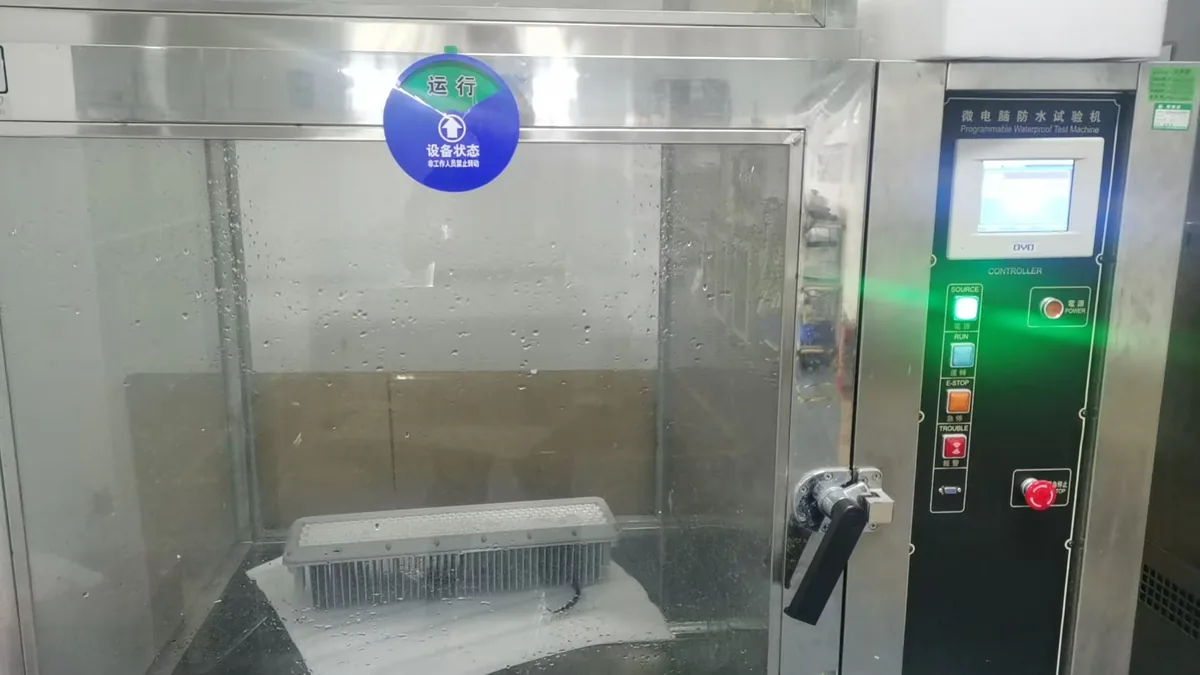
Fixture in the rain test chamber

Photometric and waterproof testing

  • IES test — light distribution curve measured on a goniophotometer; lumens and color in an integrating sphere
  • Rain test, 100 % — every assembled fixture, after it passes airtightness
  • Soak after aging — spot-check on aged fixtures

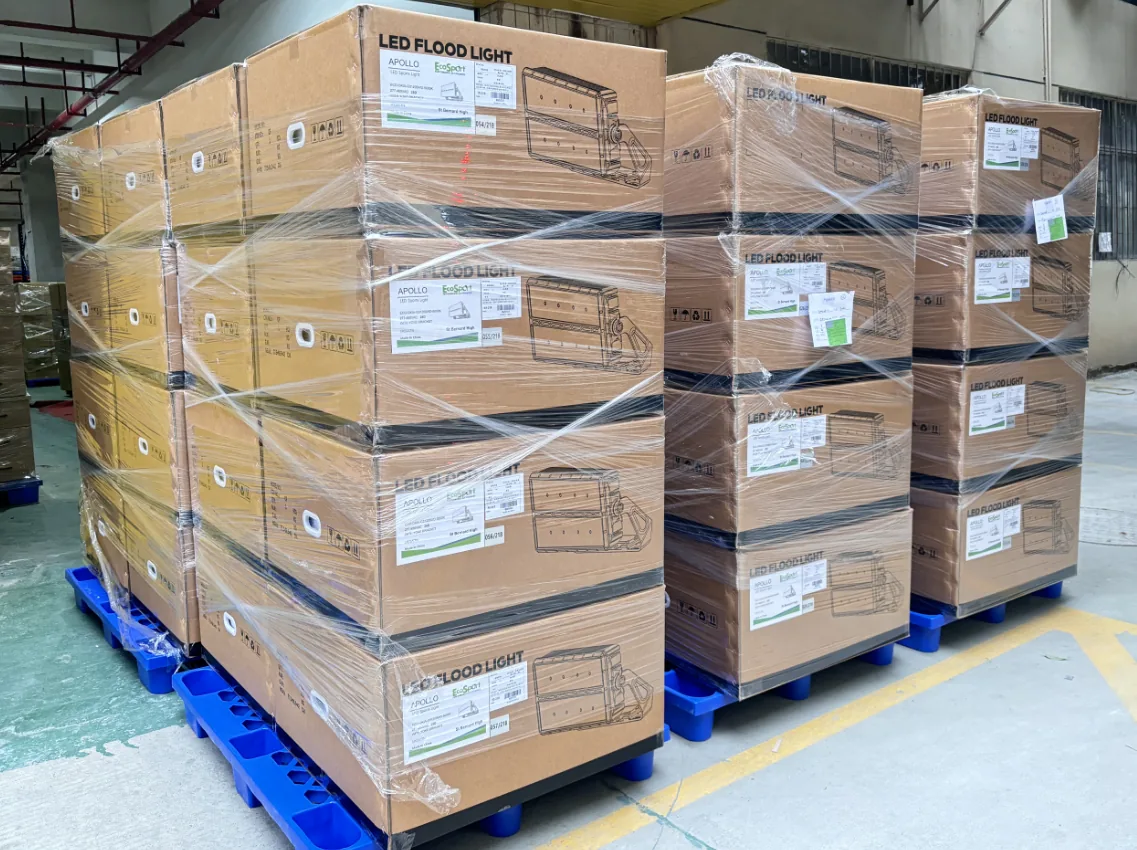
Finished goods & shipping

EcoSport

Performance,
not promises.

EcoSport · Product Advantage
Apollo G3 · Atlas Scorpius · ECO NXS Failsafe System